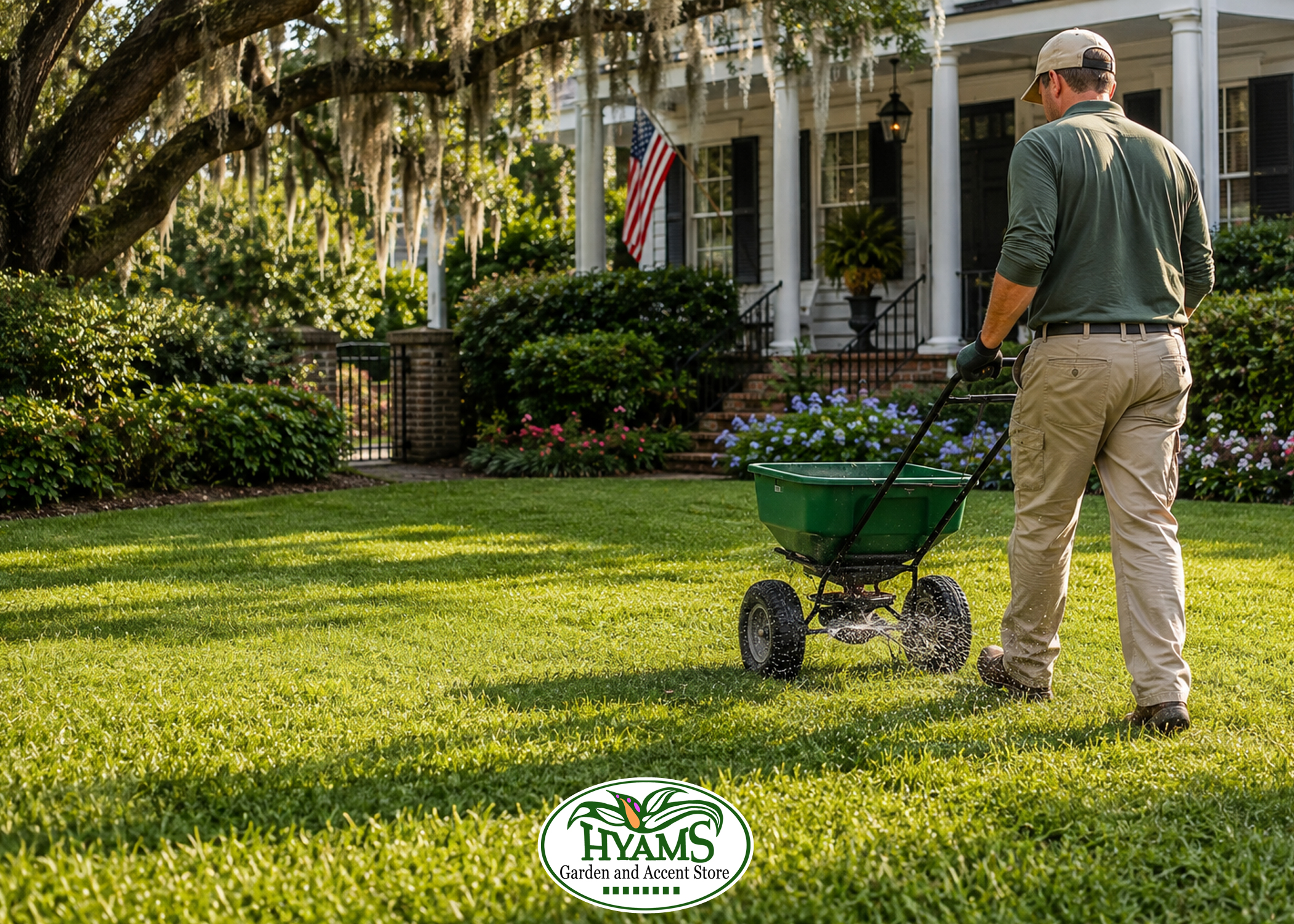
A beautiful lawn in the Lowcountry doesn’t happen by luck. It happens by planning ahead. One of the most important steps you can take this season is applying a pre-emergent herbicide to help stop winter weeds before they ever appear.
September is the time to start getting ready. A little preparation now can save you weeks of weeding later.
Why Timing Matters
Pre-emergent weed control works by creating a barrier in the soil that prevents weed seeds from successfully germinating. The important word is before.
Once winter weeds have emerged and are visible, a pre-emergent treatment is too late to control them. That is why paying attention to the changing weather in September is so important.
For Charleston and the surrounding coastal areas, Clemson Extension recommends applying fall pre-emergent when nighttime temperatures reach approximately 55–60°F for four consecutive days. This typically occurs between mid-September and early October, although the exact timing varies from year to year.
In other words, watch the weather, not simply the calendar.
Know What You’re Preventing
Several common lawn weeds are winter annuals. Their seeds germinate in the fall, remain relatively small through the cooler months, and become much more noticeable as winter progresses and spring approaches.
Annual bluegrass (Poa annua) is one of the most familiar examples. Other winter weeds may include chickweed, henbit, bittercress, and various other annual broadleaf weeds.
Preventing these weeds before they become established is generally much easier than trying to remove them once they have taken hold.
How to Apply Preemergent
Choose a quality pre-emergent product that is specifically labeled for your type of turfgrass and for the weeds you want to prevent.
For granular products:
– Apply the product evenly across a dry lawn using a properly calibrated broadcast spreader.
– Follow the product label carefully for the correct application rate.
– Water the lawn after application as directed on the label. Many granular pre-emergent products require approximately one-half inch of irrigation or rainfall to move the active ingredient into the soil.
– Avoid uneven application, which can leave areas of the lawn unprotected.
Always read the entire product label before applying any herbicide. The label is the best source for application rates, watering requirements, turfgrass restrictions, and safety precautions.
Established Lawns vs. New Lawns
Pre-emergent herbicides are intended primarily for established turfgrass.
If you have recently seeded or sodded a lawn, take particular care before applying a pre-emergent product. Newly established grass needs time to develop a strong root system, and some pre-emergent herbicides can interfere with establishment.
If your lawn is new, check the product label carefully or consult a lawn-care professional before applying anything.
If You Plan to Overseed
This is especially important for Charleston homeowners considering winter overseeding.
Pre-emergent herbicides prevent seeds from germinating—and that includes grass seed. If you plan to overseed a bermudagrass lawn with ryegrass, the timing of your preemergent application must be coordinated carefully with your seeding plans.
Clemson Extension notes that overseeding is generally recommended only for bermudagrass among South Carolina’s warm-season home lawns, and that preemergent applications must be timed appropriately if over-seeding is planned.
If you’re considering overseeding, be sure to determine your plan before applying a pre-emergent. The product label will provide the specific waiting period required between application and seeding.
A Strong Lawn Is Your Best Defense
Pre-emergent is only one part of maintaining a beautiful lawn.
A thick, healthy lawn naturally leaves less room for weeds to become established. Proper mowing, appropriate watering, and good overall turf management all contribute to a stronger lawn.
Mow at the appropriate height for your particular grass rather than cutting it excessively short. Water deeply when needed rather than giving the lawn frequent, shallow drinks. Avoid unnecessary stress during periods of heat or drought.
Healthy turf is better equipped to compete for sunlight, moisture, and nutrients.
Don’t Forget About Aeration
If your lawn needs aeration, think about that timing before applying pre-emergent.
Aeration opens the soil and improves the movement of water and air into the root zone—but it can also disturb the protective barrier created by a pre-emergent herbicide.
For that reason, Clemson Extension recommends completing necessary aeration before applying pre-emergent rather than afterward.
A little planning can help you accomplish both jobs without working against yourself.
Watch the Weather
September in Charleston can still feel very much like summer. Don’t be surprised if your lawn remains actively growing while you’re already thinking about fall.
The arrival of cooler nights is what matters most for fall pre-emergent timing.
Keep an eye on the forecast as September progresses. When those nighttime temperatures begin settling into the appropriate range, you’ll know that it is time to be prepared.
A Little Preparation Goes a Long Way
The best lawn-care projects are often the ones that happen before there is a problem.
A few minutes spent planning your fall weed-control strategy now can mean fewer winter weeds, less hand-pulling, and a healthier-looking lawn when spring arrives.
And if you’re unsure which product is appropriate for your grass, when to apply it, or how to coordinate lawn treatments with other fall projects, don’t guess.
Stop by Hyams Garden Center. We’re here to help you choose the right products and approach for your Lowcountry lawn so you can enjoy a beautiful landscape from summer through fall—and into the seasons ahead.