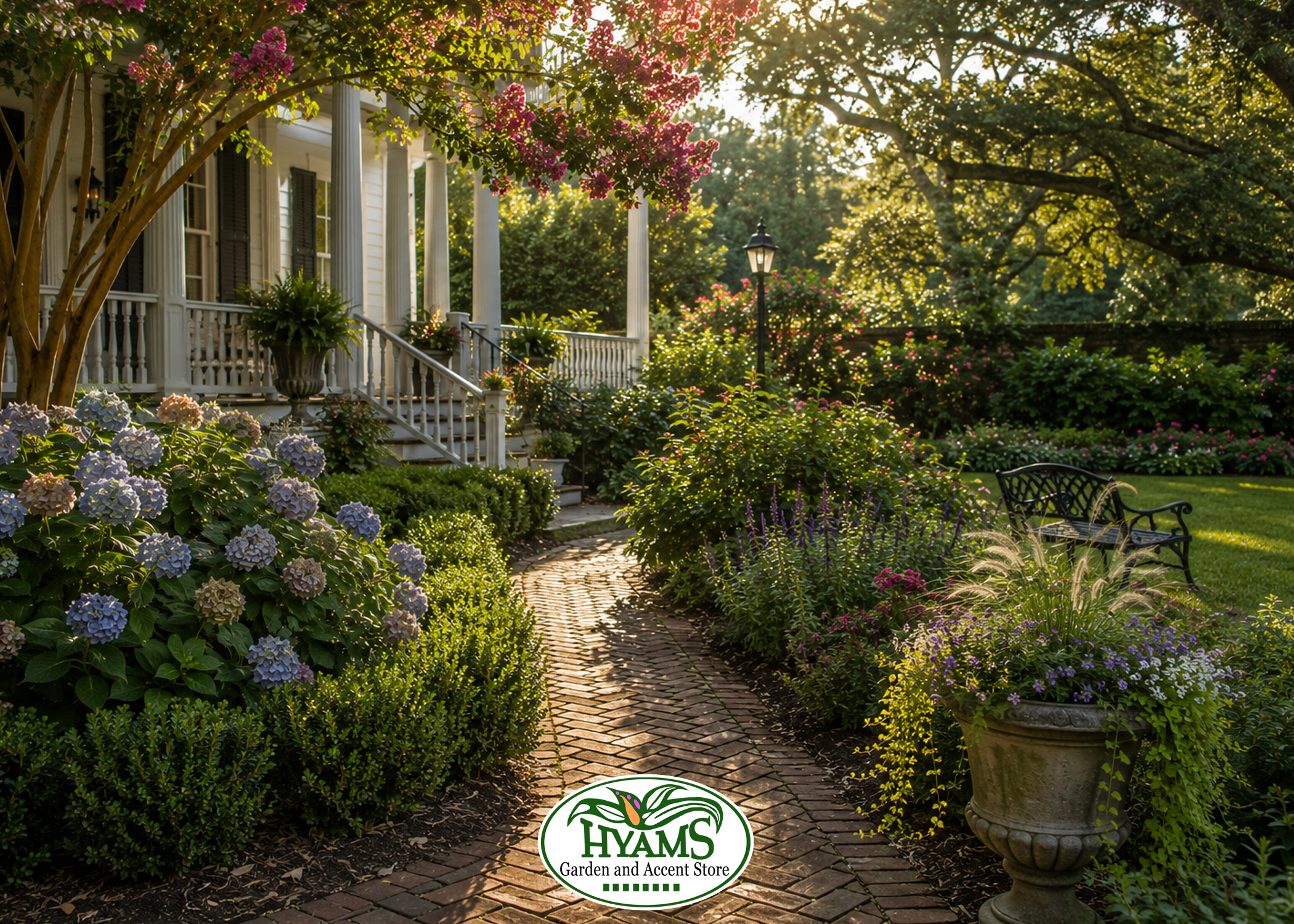
September is a month of subtle changes in the Lowcountry. Summer has not quite surrendered, yet autumn is beginning to make its presence known. The garden responds in its own quiet way—with softer light, cooler evenings, changing blooms, and the first hints of a new season.
There is something particularly beautiful about a Charleston garden in September. The crape myrtles may still be flowering. Hydrangeas still provide generous sweeps of color. Lantana, pentas, salvia, and other summer favorites continue to welcome butterflies and hummingbirds.
Yet something feels different. The days are gradually becoming shorter. The evening air occasionally carries a hint of coolness. Shadows stretch a little farther across the lawn. The garden is beginning to turn the page.
Don’t Rush Summer Away
One of the pleasures of gardening in Charleston is that our seasons rarely arrive according to a strict calendar. September may be called the beginning of autumn, but the Lowcountry garden often remains gloriously summery for weeks.
There is no reason to remove healthy flowering plants simply because September has arrived. Let your lantana continue blooming. Enjoy the last flushes of summer annuals. Allow crape myrtles to finish their spectacular display.
A garden should be allowed to change naturally. Rather than replacing everything at once, think of September as a bridge between two seasons.
Notice the Changing Light
Perhaps the first thing you notice is not a change in the plants at all, but a change in the light. The intense brightness of midsummer gradually gives way to a softer quality as the days shorten. Morning light filters differently through the branches of live oaks, and late-afternoon shadows begin to lengthen across garden paths and porches. This changing light can make familiar parts of the garden look entirely new.
A garden bench beneath an old oak, a brick walkway bordered by shrubs, or a simple container on a Charleston piazza may suddenly become a favorite place to sit at the end of the day.
Let the Garden’s Structure Take Center Stage
As seasonal flowers eventually begin to fade, the underlying structure of the garden becomes increasingly important. This is one reason experienced gardeners place such value on trees, shrubs, evergreen foliage, walls, paths, and architectural elements.
A mature live oak provides form and shade regardless of what happens to be blooming beneath it. A Southern magnolia contributes glossy evergreen foliage throughout the year. Well-placed shrubs define pathways, frame entrances, and provide continuity from one season to the next. Flowers may change, but a thoughtful garden always has something beautiful holding it together.
Refresh Without Starting Over
September is an excellent time to look critically—but kindly—at your garden. Which plants have performed beautifully? Which ones struggled in the summer heat? Is there a bare corner that could use a new shrub? Does a container need refreshing? Could a tired flower bed benefit from a new layer of mulch? Small improvements can have a surprisingly large effect.
Instead of redesigning the entire landscape, consider making a few thoughtful changes that will carry the garden gracefully into the next season.
Begin Thinking About Cool-Season Color
Eventually, the time will come to introduce plants that prefer cooler weather. Pansies, violas, snapdragons, dianthus, and other cool-season annuals can bring fresh color to the garden as summer flowers begin to decline.
But there is no need to rush.
Charleston’s September temperatures can still be quite warm, so timing matters. Watch the weather and give cool-season plants the conditions they need to establish successfully. When the time is right, even a few new containers or carefully planted beds can give the landscape an entirely different personality.
Look Ahead While You’re Looking Around
September is also a wonderful month for garden planning. Walk through your property and imagine what you would like to see next spring. Is there a place where a flowering tree would make a difference? Would a new evergreen provide privacy? Could a garden path be extended? Is there room for a small sitting area beneath a shade tree?
Fall planting gives trees and shrubs an opportunity to establish roots while conditions become more favorable, making this an excellent season to invest in the long-term beauty of your landscape.
A Garden Is Always Becoming
Perhaps the greatest lesson a garden teaches us is that it is never finished. There is always something blooming, something fading, something growing, and something waiting to emerge. A mature garden is not beautiful because every plant is constantly at its peak.
It is beautiful because the whole landscape changes together. The crape myrtle finishes its summer display. A hydrangea slowly changes character. Leaves deepen in color. A new container comes into bloom. An old tree casts a longer afternoon shadow.
Each change becomes part of the garden’s story. Enjoy the In-Between. We often think of gardens in terms of their great seasons—the brilliant arrival of spring, the exuberance of summer, the colors of autumn.
But there is something especially appealing about the seasons in between. September invites us to slow down and notice.
Take a walk before breakfast. Sit on the porch in the late afternoon. Watch the hummingbirds make their final visits to the summer flowers. Listen to the rustle of leaves in the live oaks. The garden may not look exactly as it did a month ago, and it will not look the same a month from now.
That is precisely its charm.
A New Season Is Waiting
Autumn in Charleston does not announce itself with a single dramatic change. It arrives gradually. It is found in the cooler evening, the softer sunlight, the changing flowers, and the gardener quietly preparing the soil for what comes next.
At Hyams Garden Center, we believe this transition is one of the most rewarding times of the gardening year. Whether you’re preparing a lawn for fall, selecting a new tree or shrub, refreshing a container, or simply looking for inspiration, we’re here to help you make the most of every season in your Lowcountry garden.
So don’t hurry through September.
Pause.
Look around.
Enjoy what is still blooming, make plans for what comes next, and remember that a garden is never more beautiful than when it is quietly becoming something new.