A Timeless Beauty in the Heart of the Lowcountry
There are few flowers that seem quite so at home in Charleston as the camellia.
With their exquisite blossoms, lustrous evergreen foliage, and graceful forms, camellias bring an extraordinary elegance to the garden. Their flowers, appearing when much of the landscape has grown quiet, offer a welcome reminder that beauty does not belong to spring alone.
For generations, these remarkable shrubs have been cherished throughout the Lowcountry. They are more than ornamental treasures; they are living connections to Charleston’s rich horticultural heritage.
And November is a particularly wonderful time to welcome one into your garden.
A Flower with a Charleston Story
The camellia’s story in the Charleston area reaches back to the late eighteenth century.
According to longstanding Middleton Place tradition, the French botanist André Michaux brought camellias to the Middleton family near Charleston in 1786. One historic cultivar, Reine des Fleurs, or “Queen of Flowers,” is associated with that early introduction.
The camellia would eventually become one of the defining plants of Charleston’s historic gardens.
At Magnolia Plantation and Gardens, the enthusiasm for camellias grew particularly strong under Reverend John Grimké Drayton during the nineteenth century. His efforts to cultivate and propagate these remarkable plants helped establish Magnolia’s celebrated camellia collection.
The historic gardens of the Charleston area became important centers of camellia cultivation, helping preserve and popularize varieties that continue to delight gardeners today.
These gardens also bear witness to the skilled and often unrecognized labor of enslaved people and later generations of horticultural workers who tended and maintained the landscapes.
When we plant a camellia in our own gardens, we participate in a horticultural tradition that has endured for centuries.
Two Camellias to Know
While there are many species and cultivars to discover, two are particularly beloved in Charleston.
Camellia sasanqua — Autumn’s Flowering Treasure
The Sasanqua camellia is a delightful choice for the November garden. Its flowering season typically begins in autumn and may continue into early winter.
Sasanquas often have a more open, graceful growth habit than their Japonica cousins. Their flowers may be single, semi-double, or more elaborate, appearing in shades of white, pink, and red.
They are generally more tolerant of sunlight than Japonicas, making them useful for sunny or partially shaded garden locations.
A Sasanqua camellia can be planted as a specimen shrub, incorporated into a mixed border, or used to create an attractive evergreen hedge.
Camellia japonica — Winter’s Floral Elegance
The Japonica camellia is the classic camellia of Charleston’s historic gardens.
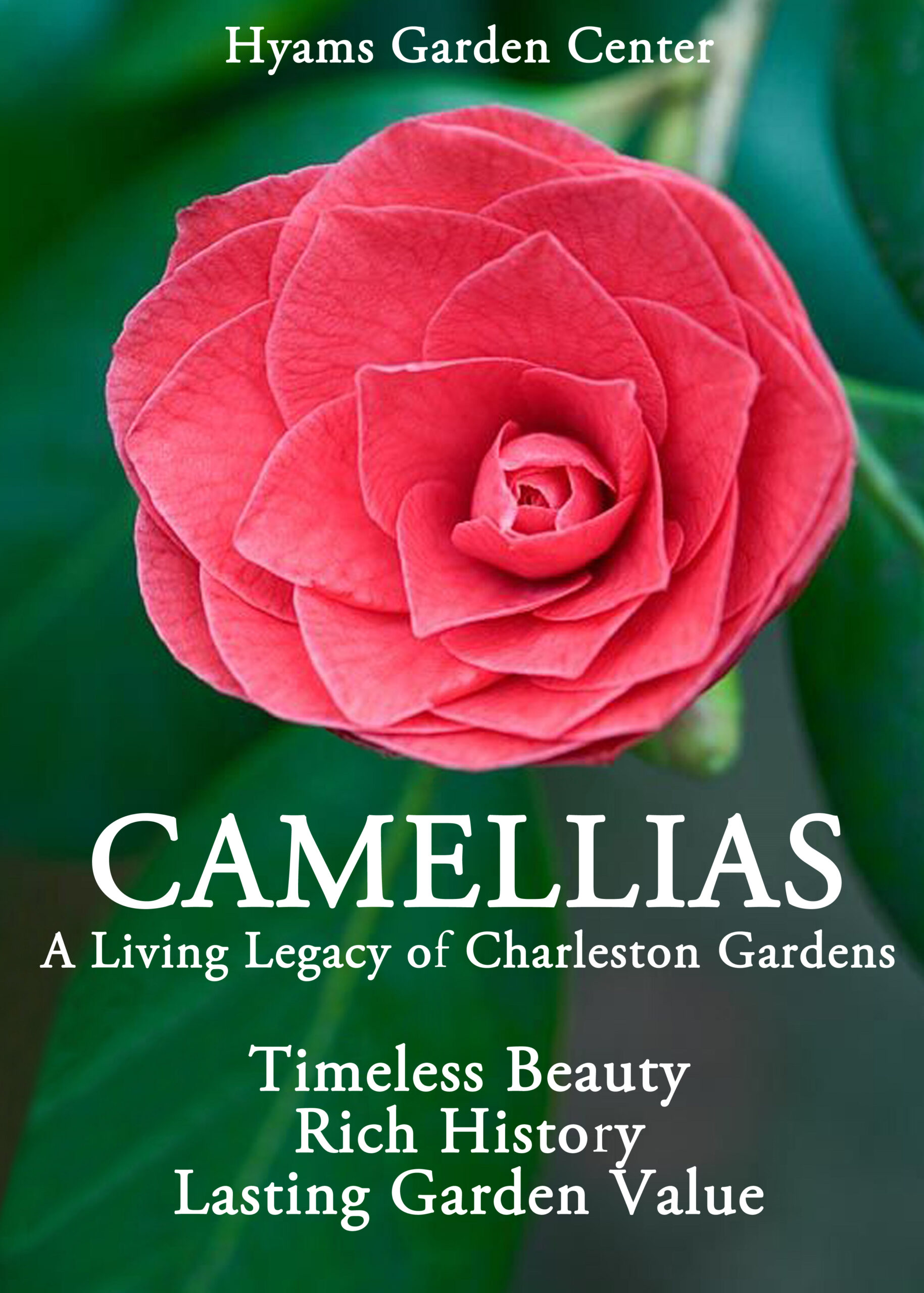
Its large, richly layered flowers may resemble roses, peonies, or perfectly arranged petals of porcelain. Depending upon the cultivar, blooms can be white, blush pink, deep red, or beautifully variegated.
Japonicas generally flower from winter into early spring, providing color when the garden most appreciates it.
They prefer partial shade, particularly protection from the intense afternoon sun, and thrive in well-drained, slightly acidic soil.
For an elegant garden beneath the dappled shade of mature trees, a Japonica camellia is an exceptional choice.
Creating a Place for Camellias in Your Garden
Camellias are wonderfully versatile.
A single specimen can become a focal point beside a garden entrance. Several plants arranged along a woodland path can create a serene and inviting atmosphere. A carefully selected collection of different cultivars can provide a succession of blooms from autumn through early spring.
When selecting a planting location, consider:
- Light: Partial shade is ideal for many Japonicas. Sasanquas generally tolerate more sunlight.
- Soil: Camellias prefer slightly acidic, well-drained soil.
- Moisture: Keep the soil consistently moist during establishment without allowing it to become waterlogged.
- Mulch: A 2- to 3-inch layer of organic mulch helps retain moisture and moderate soil temperatures.
- Placement: Allow sufficient room for the plant’s mature size and natural shape.
November is an excellent time to plant camellias in the Charleston area. The cooler weather allows roots to begin establishing before the arrival of warmer spring conditions.
A Beauty That Belongs to Charleston
Perhaps the greatest charm of the camellia is that it offers both immediate beauty and enduring significance.
Its glossy leaves remain attractive throughout the year. Its blossoms brighten the cooler months. And its place in Charleston’s garden history gives it a character that few other ornamental plants can match.
A camellia planted today may become a treasured feature of your garden for decades to come.
This November, consider adding one of these remarkable plants to your landscape. Whether you choose a Sasanqua for its autumn blossoms or a Japonica for its winter and early spring display, you will be bringing home a little of Charleston’s enduring garden heritage.
Visit Hyams Garden Center to explore our camellias and discover the varieties that may be just right for your garden.
Let your garden tell a story — one beautiful bloom at a time.
Hyams Garden Center — Growing Beauty in the Lowcountry.
Leave a Reply