• Skip to primary navigation
  • Skip to main content
  • Skip to primary sidebar

Hyams Garden Center and Accent Store

Serving Greater Charleston Area with Quality, Variety & Professionalism since 1981

  • Garden Center
    • Plants
    • Fountains, Statuary and Garden Décor
    • Planters & Pots
    • Garden Supplies
    • Hyams Gift Cards
  • Gardening Wisdom
    • Hear the Flowers Whisper
    • What does the Gardener say?
  • Services
    • Delivery and Planting
    • Fountain Installations
    • Custom Designed Pots, Containers & Window Boxes
    • Diagnostic Center
    • Special Orders
    • Christmas Tree Delivery & Set up
  • Accent & Gift Store
    • Home Décor & Gift Items
    • Life like Botanicals and Flowers
    • Wreaths, Bows & Ribbons
    • Candles
    • Seasonal Décor
    • Christmas Décor
    • Greeting Cards for All Occasions
    • Hyams Gift Cards
  • About Us
    • Location and Hours of Operation
    • Contact Us
    • Meet Our Team
  • Inventory
    • Bedding Plants
    • Bulbs
    • Fruit Trees & Plants
    • Garden Supplies
    • Hanging Baskets
    • Nursery
    • Topiaries
    • Trees
    • Tropicals
    • Vegetables & Herbs
    • Water Plants

Garden Center

January 4, 2021 By Hyams Garden Center

Issues to be looked into before the Installation of a Fountain

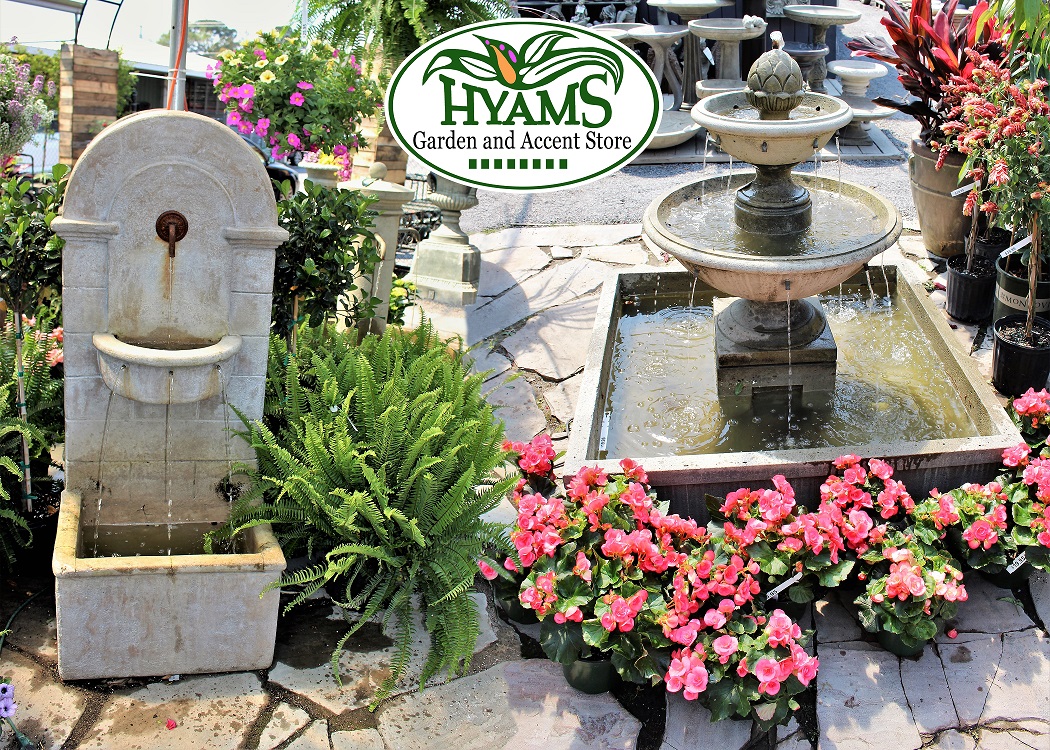
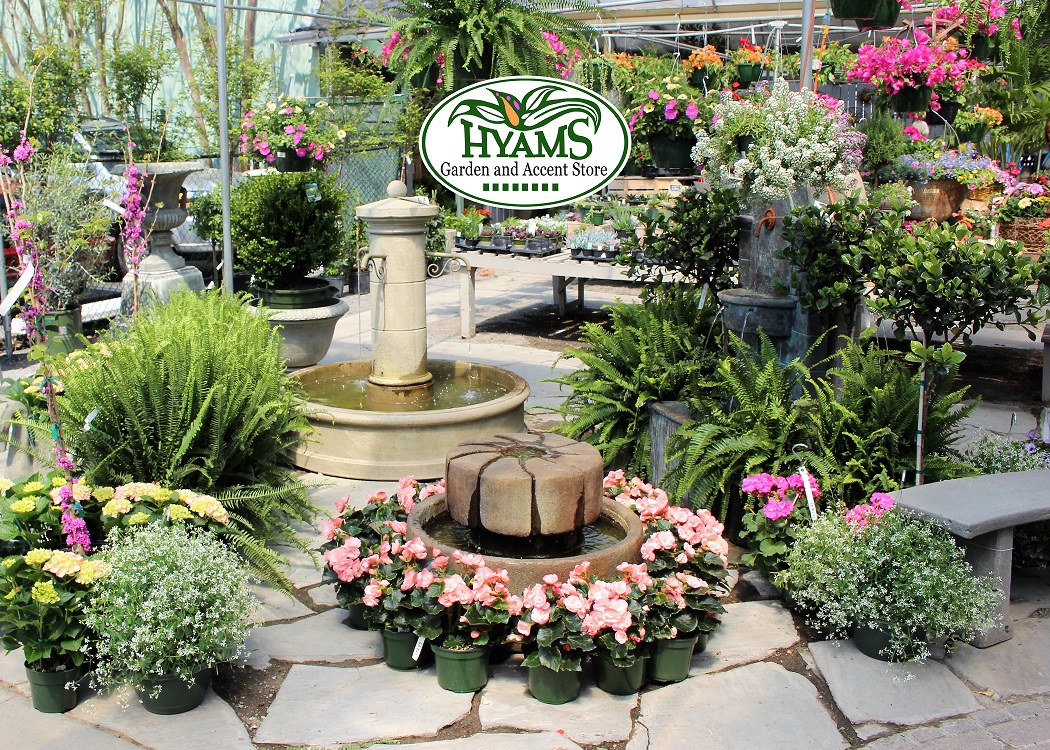
Fountain installation can be carried out efficiently if the following issues are addressed prior to the installation:

Accessibility of the Area for Installation: Take into account the size and weight of the fountain you have selected and thus determine the best route to bring the fountain to the location where it has to be installed. That is the key. For smaller fountain this may be inconsequential. However, one needs to pay attention to the issue of accessibility if you have to bring in pool or wall basins and other large pieces. The wellbeing of your home and fountain as well as the safety of our installation personnel will have to be clearly thought through. Fountains that include basins with diameters 70” or larger require that our delivery truck be able to back up directly to the installation site.
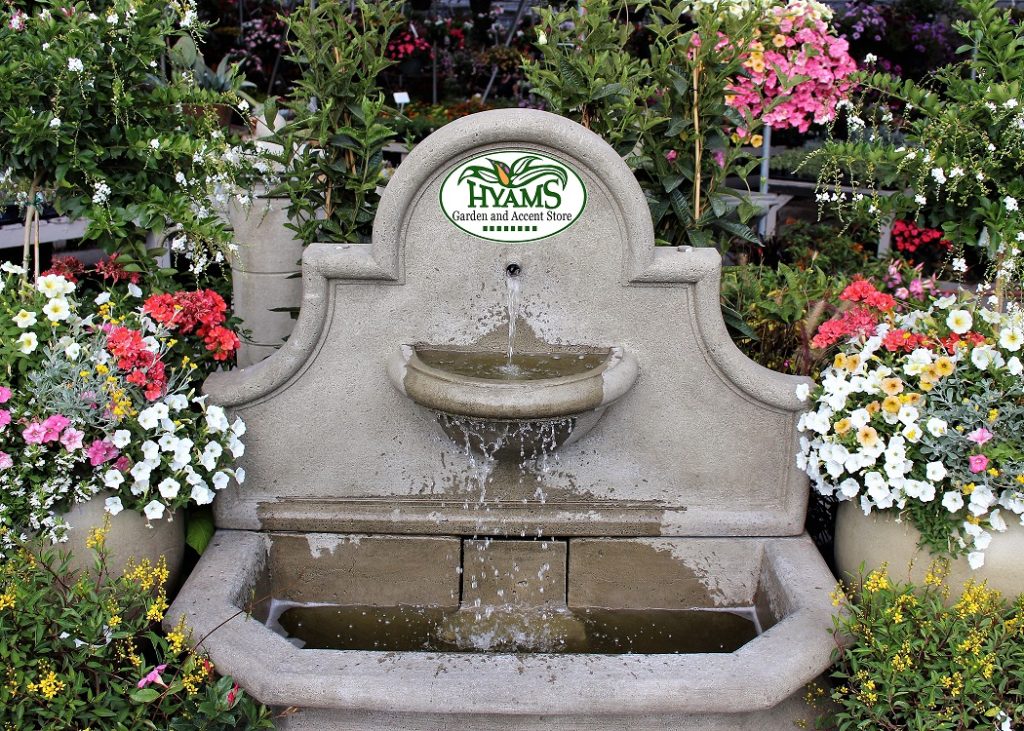
Clear the Area prior to Installation: A clean and properly grated area is ideal for installation. Please do your best to clear the area. If any existing landscaping, etc., needs to be removed please do so or notify us before delivery. If additional equipment or materials are needed please let us know beforehand, as this will aid in completing the job properly and in a timely fashion. For example, if the area is boggy, we suggest mixing in contractor’s sand to improve drainage and help stabilize the fountain. On the other hand, if the fountain is going on a deck or a wall and drilling is necessary to hang the fountain, conceal the cord or access electricity, the proper drill and specific bits will be necessary. We aim to arrive properly equipped and be able to finish the job efficiently. However, we need to tap into your knowledge of the location of installation and cooperation to get it done right the very first time.
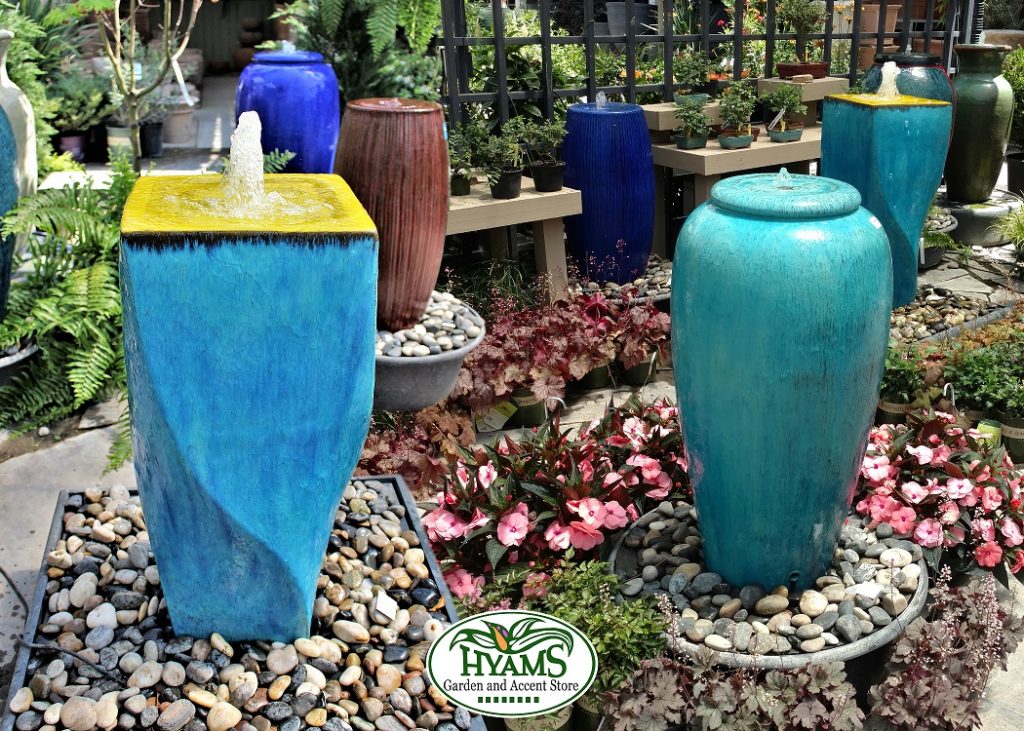
Electricity and Access to Water are the basic necessities of installing a fountain. Electricity must be in place before our personnel arrive on site for installation. If you do not have electricity in the area, we suggest that you have a standard outdoor electrical box on a GFI breaker installed in an accessible place nearby the fountain and within the reach of the pump’s cord. Finally, before our personnel leave the installation site, they must fill water and operate the fountain to ensure that it is working properly. If the fountain site is a considerable distance from the water source, please make sure to supply additional hose.
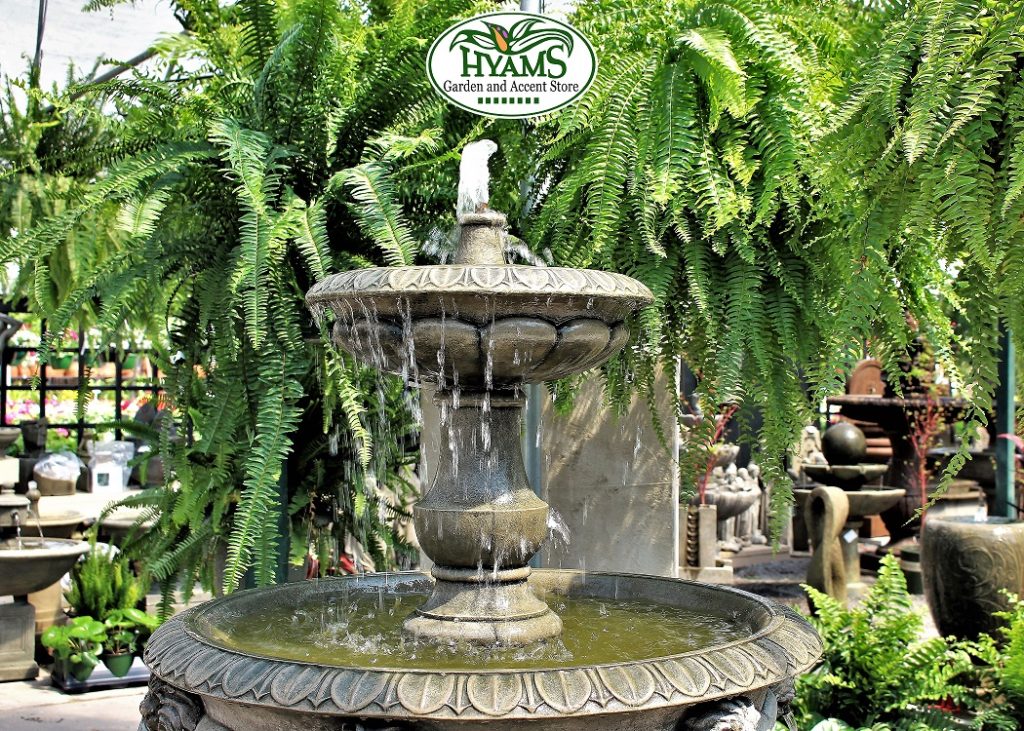
Please contact Hyams Garden Center at 843-795-4570 if you have any further questions or concerns. It is important to know as much as possible before we arrive on the site of installation in order to save us all valuable time and money. Your cooperation in helping us to improve our service is always appreciated.   
Filed Under: Fountain Installations, Fountains, Garden Center, Gardening Wisdom, Uncategorized, What Does the Gardener Say? Tagged With: Fountain Installations, Hyams Garden Center

January 2, 2021 By Hyams Garden Center

Fountain Maintenance

Here is how one needs to take proper care of all cast stone fountains:

Ensure that the pump always remains submerged. In order to do that consistently fill the fountain and maintain a proper water level. When the water level is too low, the pump runs the risk of being damaged. The frequency of filling the water depends on water flow and specific weather conditions in which the fountain runs. Proper fountain performance also depends on appropriate water level.

Pump inflow needs to be kept free of debris to ensure proper water inflow. Cleaning it periodically will let your pump last longer.

Use a mild soap and a soft bristle brush if the fountain requires a cleaning. Do not use bleach as it may affect the patina.

Hyams Garden Center carries “Algaecides” if one needs to combat the buildup of algae.

Hyams Garden Center is always ready take your calls ( 843-795-4570) if you have any questions concerning your fountain. For problems that cannot be remedied over the telephone, an onsite visit can be scheduled. You will be charged a minimum $50 fee for each onsite consult.   

Filed Under: Fountains, Garden Center, Gardening Tips, Uncategorized, What Does the Gardener Say?

June 24, 2020 By Hyams Garden Center

Diseases of the Lawn

Now is a good time to get the jump on lawn diseases. Besides applying fungicides there are several cultural practices that can help prevent them. Three most common diseases that affect the lawns are: gray leaf spot, brown patch and dollar spot. The beauty of a lawn can be quickly destroyed by these fungal diseases.

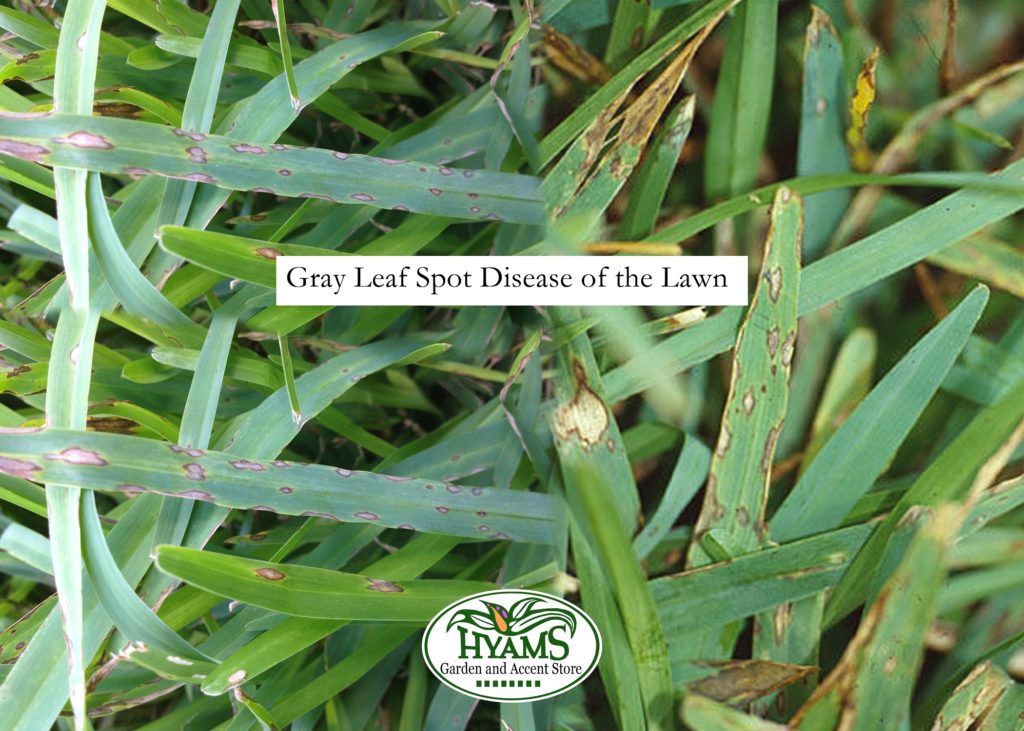
Gray Leaf Spot on St. Augustine grass

Gray leaf spot is a fungal disease that occurs most commonly on St. Augustine grass. The initial leaf spots are small and brown, but they expand rapidly into large, oval or elongate, tan to gray leaf spots, which are surrounded by purple or brown borders. A yellow halo may surround some of the spots, or a general leaf yellowing may occur.

During warm, humid weather the fungus produces a grayish mycelium (cottony fungal growth) and numerous spores on dying foliage, which gives a grayish appearance to the spots. Blades of grass will wither and die if leaf spots are numerous. Under favorable conditions for disease development, large areas of turf may appear to be scorched, resembling extreme drought stress.

Gray leaf spot is favored when temperatures are between 77 and 86 °F during the day and above 65 °F at night, and is most severe during rainy, humid periods. The fungus survives dry summer conditions as fungal mycelium and spores on dead foliage and in the thatch layer. When favorable conditions of moisture and high humidity return during the summer, the fungus produces an abundance of spores that are spread by wind, splashing rainfall or irrigation, and the movement of lawn equipment on wet grass.

How to Manage Gray Leaf Spot Disease of the Lawn?

  • Reduce thatch layer.
  • Irrigate deeply, but infrequently. This generally means one time per week with one inch of water. Always irrigate in the morning, which promotes quick drying of the foliage.
  • Avoid using post-emergent weed killers on the lawn while the disease is active.
  • Avoid medium to high nitrogen fertilizer levels.
  • Improve air circulation and light level on lawn. Limb up over-hanging trees and prune back nearby shrubs.
  • Mow at the proper height and only mow when the grass is dry. Bag and dispose of grass clippings if disease is present.
  • Control chinch bug infestations.
  • Use fungicide treatments as needed along with proper turf grass culture.

Brown Patch and Large Patch Diseases of Lawns

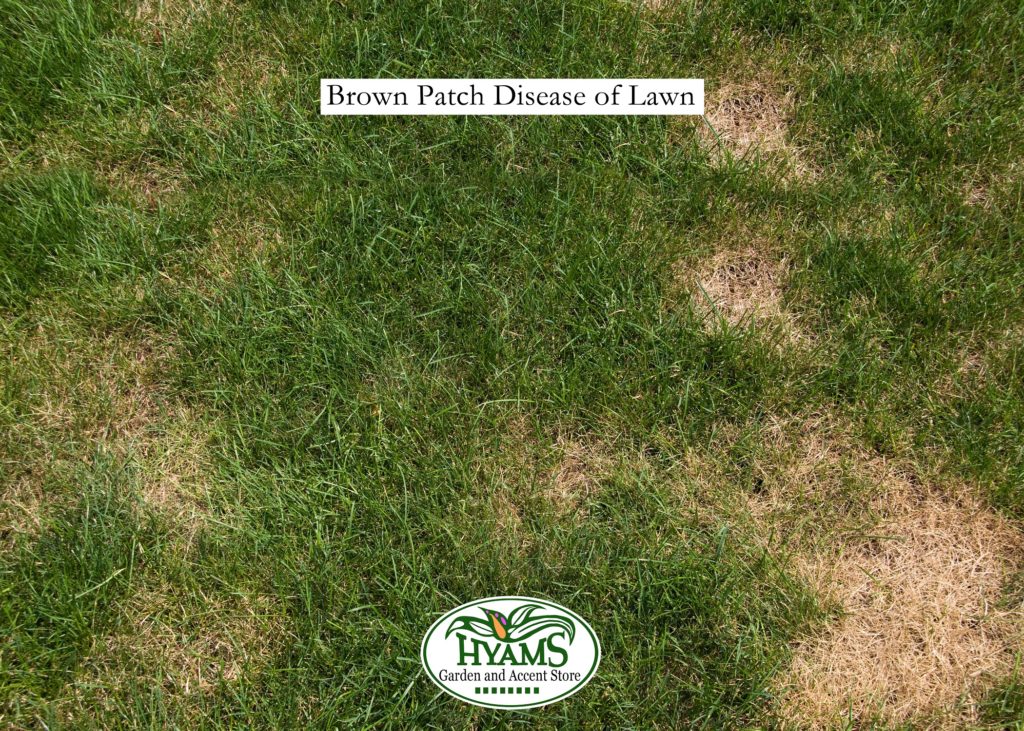
Brown patch and large patch are serious fungal diseases (each caused by different strains of Rhizoctonia solani) that can affect all South Carolina lawn grasses. Disease can develop rapidly when daytime temperatures are warm (75 to 90 °F) and humid, nighttime temperatures are above 60 ºF, and there is an extended period of leaf wetness. Generally, symptoms of brown patch begin on cool-season grasses (tall fescue, ryegrass, bluegrass and bent grass) during the late spring. It may also occur on these grasses during warmer periods of the winter months. Warm-season grasses (St. Augustine grass, zoysia grass, Bermuda grass and centipede grass) most commonly are affected by large patch (formerly also known as brown patch) during the early spring and late fall.

Symptoms of brown and large patch diseases may vary greatly with the type of grass and soil conditions. The diseases usually cause thinned patches of light brown grass that are roughly circular in shape. These areas range in diameter from a few inches to several feet. Often the center of the patch will recover, resulting in a doughnut-shaped pattern.

When disease conditions are favorable, large areas of the lawn may be uniformly thinned and eventually killed with no circular patch being evident. This type of pattern is commonly seen on infected St. Augustine grass grown in shady, moist locations.

All types of warm-season or cool-season lawn grasses grown in South Carolina can be affected by large patch or brown patch, respectively.

Prevention & Treatment of Brown Path Disease of the Lawn

The best way to prevent brown patch or large patch in the home lawn is by following good lawn care practices. This is much easier and less expensive than the use of fungicides and can be very effective.

  • Avoid high rates of nitrogen fertilizer on cool-season grasses in the late spring and summer. Avoid high nitrogen rates on warm-season grasses in mid to late fall or in early spring. The disease-causing fungus readily attacks the lush growth of grass which nitrogen promotes. Avoid fast-release forms of nitrogen fertilizer.
  • Irrigate grass only when needed and to a depth of 4 to 6 inches (generally 1 inch of irrigation water per week), but do not subject the lawn to drought conditions. Water early in the morning. This disease can spread fast when free moisture is present, especially greater than 10 hours.
  • Avoid spreading the disease to other areas. Remove clippings if the weather is warm and moist to prevent spread to other areas during mowing.
  • Keep lawns mowed on a regular basis to the proper height for the grass species you are growing. Lower than optimum mowing height can increase disease severity. Do not mow fescue lawns shorter than 2½ inches high, nor higher than 3½ inches. Mow centipede at 1½ inches high.
  • Provide good drainage for both surface and subsurface areas. Correct soil compaction by core aeration. Prevent excessive thatch buildup.
  • Have the soil tested and apply lime according to test recommendations. Disease may be more severe if the soil pH is less than 6.0. Keep potassium (K) level at upper end of sufficient rating on soil test.

Fungicides can be difficult to rely upon for controlling brown patch and large patch in the home lawn, but regular applications can vastly improve appearance. A good “rule of thumb” to follow on either cool- or warm-season grasses is to initiate fungicide sprays when nighttime low temperatures reach 60 °F. Stop applications when nighttime lows are forecast to be below 60 °F for five consecutive days. Typically, applications are made at 14- to 28-day intervals, depending upon the fungicide. If disease is severe enough to warrant chemical control, select one of the following fungicides listed in Table 1.

It will help in disease control to alternate fungicides used with subsequent applications to prevent a buildup of resistance to a fungicide. Slightly better control may be obtained by a liquid fungicide application rather than by granular application of the same fungicide active ingredient. Granular fungicides must be irrigated after application (follow label directions).

Dollar Spot Disease of the Lawns

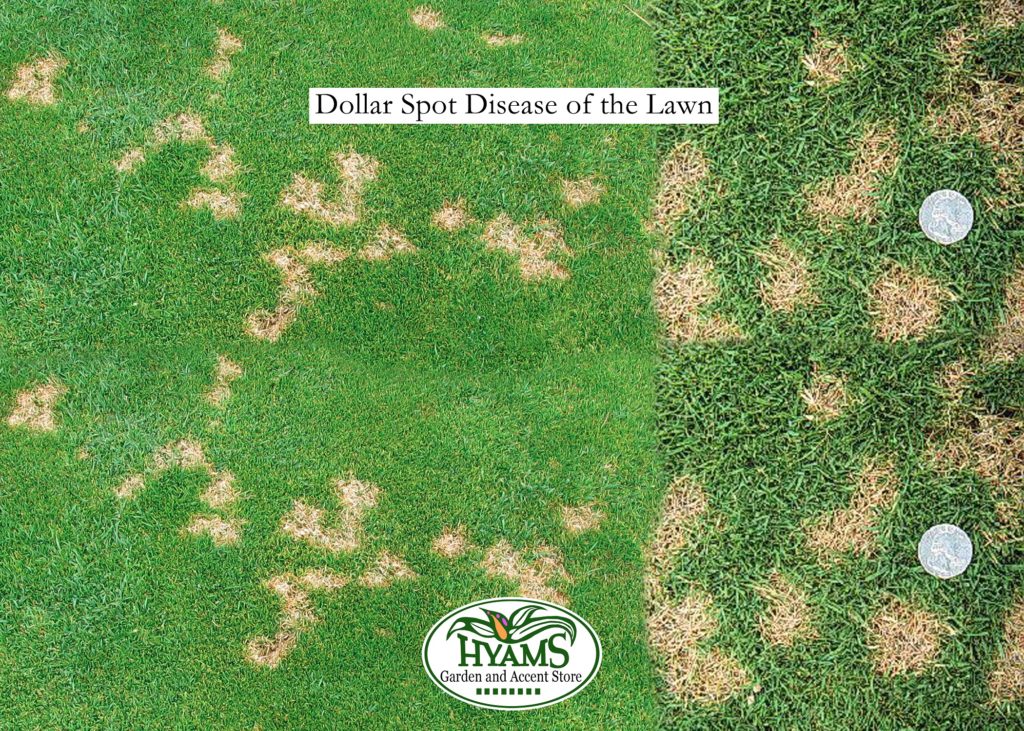
Dollar spot is caused by a fungus. It causes straw-colored spots about the size of a silver dollar (2 to 6 inches diameter) to appear on closely mowed turf. Grass in affected areas may die and the spots may merge to form larger, irregular patches. In coarse textured grass that is cut high, the dead spots are larger and more diffuse. Leaf blades have light tan spots with reddish-brown margins that develop across the leaves. Early in the morning you may be able to see a cobweb-like growth of the fungus over the infected area.

Dollar spot most commonly occurs on Bermuda grass, zoysia grass and centipede grass. Dollar spot is most active from late spring through fall. The fungus develops during humid weather, when daytime temperatures are warm (59 to 86 °F) and nights are fairly cool. These conditions result in heavy dew forming on the grass.

Prevention & Treatment of Dollar Spot Disease:

Adequate fertilization will help the lawn overcome this disease. Prevent thatch buildup and remove excess thatch. Avoid drought stress by watering the lawn deeply, and thoroughly when needed, timing irrigation for early morning. Remove morning dew if possible by mowing or irrigating the lawn. Fungicide applications may be needed during moist weather in the spring and fall, when day temperatures are between 70 to 80 °F. For the home lawn, fungicides that give good control of dollar spot should contain propiconazole, azoxystrobin with propiconazole, or triadimefon. Always apply all chemicals according to directions on the product label.

[For more information go to Clemson Cooperative Extension Home and garden Information Center at http://hgic.clemson.edu/]

Filed Under: Diagnostic Center, Gardening Tips, Gardening Wisdom, What Does the Gardener Say?

June 24, 2020 By Hyams Garden Center

Water Gardening

Water gardens can add beauty, charm and a feeling of serenity to any landscape project. They can be created simply by using a watertight container on your patio or porch. They can also be designed in larger, in-ground ponds.

A water garden typically consists of Floating Plants, Marginal Plants, and Submerged Plants. It can include a Fountain or other Statuary as well as a selection of fish such as Goldfish and/or Guppies. Maintaining the best water quality requires the right mix of plants.

There are a number of online sources that can be used to research which options would be best for you.

www.wisegeek.com/what-is-a-water-garden.htm

www.clemson.edu/extension/water/stormwater-ponds/problem-solving/aquatic-weeds/index.html

www.gardeners.com/how-to/water-gardening/5078.html

Inventory of Water Plants at Hyams garden Center as of April 10, 2020

SizePrice
Acorus Clamus – Veriagated Sweet Flag5″ Pot$12.95
Colocasia Esculenta – Taro5″ Pot$12.95
Colocasia Esculenta – White Lava5″ Pot$12.95
Cyperus Alternifolius-Umbrella Palm5″ Pot$12.95
Cyperus Papyrus-Egyptian Papyrus        5″ Pot$12.95
Equisetum Hyemale-Horsetail    5″ Pot$12.95
Houttuynia Cordata-Variegated Chameleon5″ Pot$12.95
Iris – Ann Chowning5″ Pot$12.95
Iris – Black Gamecock5″ Pot$12.95
Iris – Rose Queen5″ Pot$12.95
Juncus Effusus Spiralis-Corkscrew Rush5″ Pot$12.95
Lindernia Grandiflora-Blue Moneywort5″ Pot$12.95
Myriophyllum Aquaticum – Parrots Feather5″ Pot$12.95
Myriophyllum Spp. – Red Stemmed Parrots Feather5″ Pot$12.95
Oenanthe Javanica – Variegated Water Celery5″ Pot$12.95
Pontederia Cordata – Pickerel Weed5″ Pot$12.95
Thalia Dealbata – Native Water Canna5″ Pot$12.95
Thalia Geneculata – Red Stem Native Water Canna5″ Pot$12.95
Typha Laxmannii – Graceful Cattail5″ Pot$12.95
Typha Minima – Micro-Miniature Cattail5″ Pot$12.95
Nymphaea – Darwin     8″x 5″ Pot $29.95
Nymphaea – Fire Crest8″x 5″ Pot $29.95
    Nymphaea – Teas Dawn8″x 5″ Pot $29.95
Nymphaea – Virginalis8″x 5″ Pot $29.95
           Nymphaea – Alexsis     8″x 5″ Pot $29.95
Nymphaea – Lindsey8″x 5″ Pot $29.95
Nymphaea – Rhonda8″x 5″ Pot $29.95
       Nymphaea – Ruby Red8″x 5″ Pot $29.95
Nymphaea – Tina8″x 5″ Pot $29.95

Filed Under: Garden Center, Gardening Tips, Gardening Wisdom, What Does the Gardener Say?

  • « Go to Previous Page
  • Page 1
  • Interim pages omitted …
  • Page 13
  • Page 14
  • Page 15
  • Page 16
  • Page 17
  • Interim pages omitted …
  • Page 19
  • Go to Next Page »

Primary Sidebar

Find us on Facebook

Hyams Garden & Accent Store

Recent Posts

  • Flowers to Bring Home in March
  • Grow an Early Vegetable Patch
  • March in the Lowcountry: What to do in the Garden?

Categories

  • Accent and Gift Store
  • Bedding Plants
  • Candles
  • Christmas Décor
  • Christmas Room
  • Christmas Tree Delivery and Set Up
  • Custom Designed Containers, Pots, Window Boxes and Baskets
  • Deliveries and Plantings
  • Diagnostic Center
  • Everyday Gift Items
  • Featured Articles
  • Festive Décor for Various Seasons
  • Fountain Installations
  • Fountains
  • Garden Center
  • Garden Store
  • Gardening Supplies
  • Gardening Tips
  • Gardening Wisdom
  • Green House
  • Hear the Flowers Whisper!
  • Home and Garden Accents
  • Home Décor
  • Join Our Team
  • Life like Botanicals and Flowers
  • Nursery
  • Outdoor Décor
  • Planters and Pots
  • Seasonal Décor
  • Services
  • Special Orders
  • Uncategorized
  • What Does the Gardener Say?
  • Wreathes, Bows and Ribbons

Copyright © 2026 HyamsGardenCenter.com