As Americans celebrate the 250th Anniversary of the Declaration of Independence, it is worth pausing to imagine Charleston as it was during that remarkable summer of 1776.
When the Declaration of Independence was adopted in Philadelphia on July 4, South Carolina was represented by four signers: Edward Rutledge, Thomas Heyward Jr., Thomas Lynch Jr., and Arthur Middleton. Their signatures helped launch a new nation, but the story of Charleston in 1776 extended far beyond its political leaders. It was a city of merchants, craftsmen, sailors, gardeners, and families whose lives unfolded beneath the shade of ancient trees and among the gardens of the South Carolina Lowcountry.
Imagine a warm July morning in Charleston.
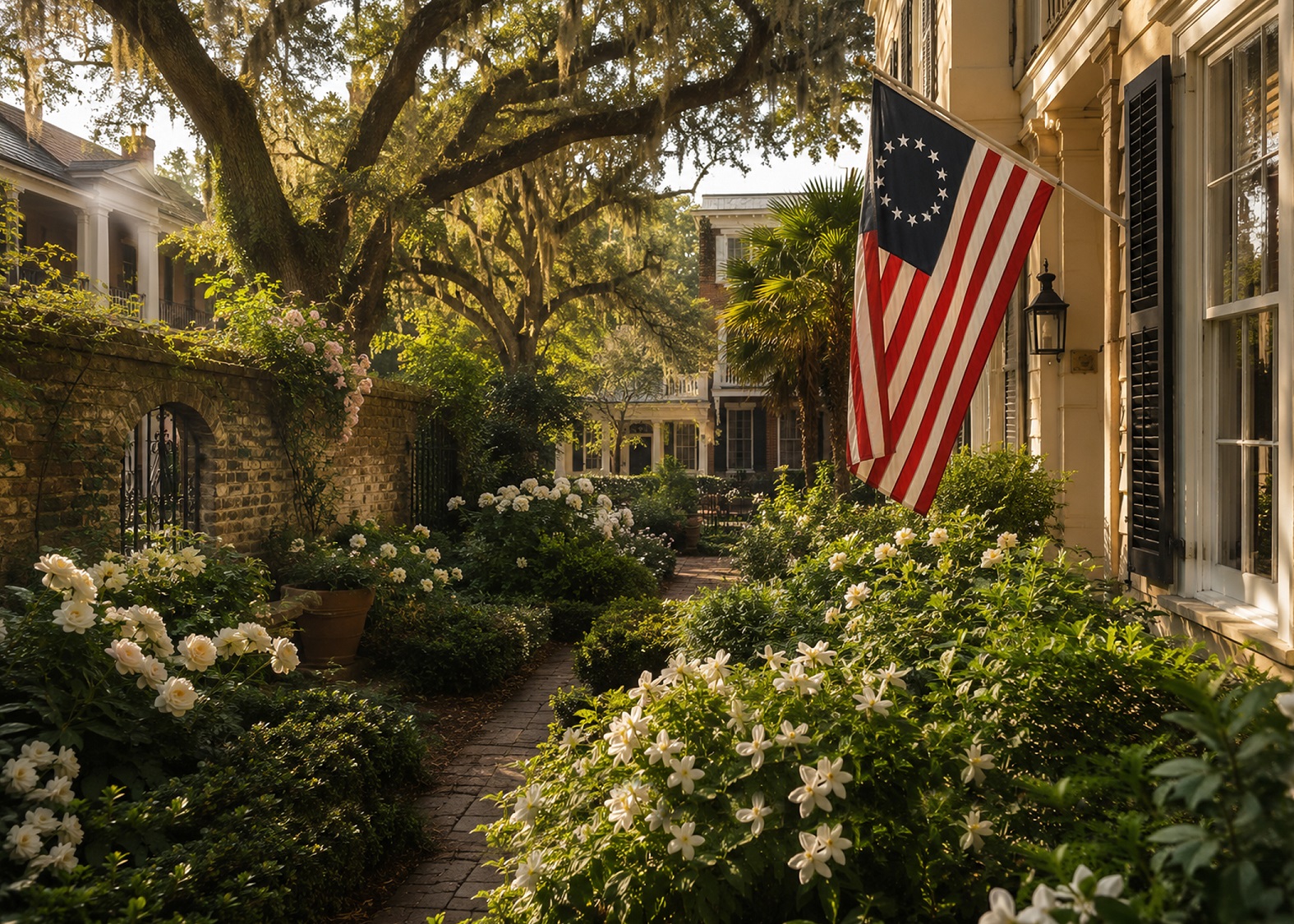
The air is heavy with humidity from the harbor. Church bells echo across the city. Horse-drawn carriages rattle along Broad Street. Live oaks spread their broad limbs overhead, casting welcome shade on streets and garden walks. Along walls and fences, old garden roses bloom amid the summer heat, while the sweet fragrance of gardenias drifts through courtyards and open windows.
Beyond the homes and businesses, gardens flourished. Charleston’s residents often maintained formal gardens inspired by European traditions, while native plants and trees provided beauty and shade throughout the region. Courtyards, garden walls, and walkways offered welcome relief from the summer heat, creating quiet places of beauty amid a growing colonial city.
Not far beyond the city, the great plantations along the Ashley River displayed formal gardens inspired by European design. The gardens at Middleton Place, begun in 1741 and still celebrated today as America’s oldest landscaped gardens, featured grand vistas, terraces, native live oaks, and carefully arranged plantings that reflected the tastes of the colonial era. Arthur Middleton, one of South Carolina’s signers of the Declaration of Independence, grew up amid those gardens.
Among the plants that would have been familiar to Charleston gardeners in 1776 were:
• Southern Magnolia (Magnolia grandiflora)
• Live Oak (Quercus virginiana)
• Gardenia (Gardenia jasminoides)
• Old Garden Roses
• Carolina Jessamine (Gelsemium sempervirens)
• Wax Myrtle (Morella cerifera)
• Citrus trees, including oranges and lemons
Several plants now considered iconic Charleston landscape staples—such as crape myrtles, many azaleas, and camellias—would not become common in the region until after the Revolution and therefore belong to a later chapter of Charleston gardening history.
As Americans celebrate the 250th Anniversary of the Declaration of Independence, it is worth remembering that the Founding Fathers did not live only in assembly halls and state houses. They lived among gardens, shaded by ancient oaks, surrounded by flowers and fragrance, and connected to the natural beauty of the landscapes they called home.
Two hundred fifty years later, the same Southern magnolias still open their creamy white blooms. Gardenias still perfume warm summer evenings. Live oaks still spread their branches across the Lowcountry sky.
Though centuries have passed, these living treasures continue to connect us to the Charleston of 1776—a city of beauty, resilience, and hope.
As we commemorate this historic anniversary, we invite you to take a moment to appreciate the plants, trees, and gardens that enrich our own lives and communities. In a world that often moves too quickly, gardens remind us of something enduring: that the seeds planted by one generation may continue to bear fruit for many generations to come.
From all of us at Hyams Garden Center, we wish you and your family a joyful and meaningful Independence Day. May your holiday be filled with gratitude for those who secured our liberties, appreciation for the beauty that surrounds us, and confidence in the promise of future generations.
Happy 250th Anniversary, America!
— The Hyams Garden Center Team