• Skip to primary navigation
  • Skip to main content
  • Skip to primary sidebar

Hyams Garden Center and Accent Store

Serving Greater Charleston Area with Quality, Variety & Professionalism since 1981

  • Garden Center
    • Plants
    • Fountains, Statuary and Garden Décor
    • Planters & Pots
    • Garden Supplies
    • Hyams Gift Cards
  • Gardening Wisdom
    • Hear the Flowers Whisper
    • What does the Gardener say?
  • Services
    • Delivery and Planting
    • Fountain Installations
    • Custom Designed Pots, Containers & Window Boxes
    • Diagnostic Center
    • Special Orders
    • Christmas Tree Delivery & Set up
  • Accent & Gift Store
    • Home Décor & Gift Items
    • Life like Botanicals and Flowers
    • Wreaths, Bows & Ribbons
    • Candles
    • Seasonal Décor
    • Christmas Décor
    • Greeting Cards for All Occasions
    • Hyams Gift Cards
  • About Us
    • Location and Hours of Operation
    • Contact Us
    • Meet Our Team
  • Inventory
    • Bedding Plants
    • Bulbs
    • Fruit Trees & Plants
    • Garden Supplies
    • Hanging Baskets
    • Nursery
    • Topiaries
    • Trees
    • Tropicals
    • Vegetables & Herbs
    • Water Plants

Gardening Tips

October 29, 2019 By Hyams Garden Center

Guidelines for the Care of Tillandsia

Tillandsia come in many different sizes, shapes, textures, and colors. All tillandsia are easy to grow. Tillandsia are in the bromeliad family (Bromeliaceae) and originate from South and Central America. Tillandsia’s foliage consists of absorbent, furry scales which take up water from humid air. The most well-known species of tillandsia (T.usneoides) is Spanish Moss and is found throughout America in warmer, humid regions, hanging from trees such as live oak.

HUMIDITY – Tillandsia prefer high humidity in order to absorb both water and nutrients. Normal room temperature is suggested with a minimum of 50˚ Fahrenheit/10˚ Centigrade. Brown leaf tips are indications that the humidity must be increased.

WATERING – Water is absorbed through the furry scales on the foliage, therefore the best method for watering is to mist the plant with a spray bottle, thoroughly wetting the leaves. During the summer, mist the plant twice a week; during the winter, mist the plant once a week or once every two weeks.

FERTILIZE – Fertilizing is not required, however a half-strength solution of high-potash liquid fertilizer can be added to the misting water once every week in spring and summer.

LIGHT – Tillandsia require bright indirect light or full shade outside, BUT NO DIRECT SUN.

POTTING – Tillandsia are air plants, so they get their nutrients from their foliage. Potting of Tillandsia will cause rotting at the base of the plant. Tillandsia can be left with no mounting, or they can be mounted on wood or bark. Tillandsia can be found on the limbs of trees. Roots are used for anchorage.

Filed Under: Garden Center, Gardening Tips, Gardening Wisdom, Green House, What Does the Gardener Say?

July 23, 2019 By Hyams Garden Center

Watering Reminder + Tips

With the spike in temperatures, your trees are feeling the stress just like you are. Help them beat the heat by increasing your watering. Here are some guidelines and tips for watering and caring for your investment.

Water issues are the number one cause of a failed planting.

Implement a thorough watering program that fits your site, drainage, reactions to weather conditions, and persist until the tree is established.

Initial Watering Schedule:

Water daily while above ground, 3 to 5 times a week after planting

Amount per Application:

10 to 20 gallons (1 US gallon equals 3.78 liters) of water every 1” of caliper each application.

Rate: Water should be applied slowly and in sufficient quantity to reach a zone 24” deep or more.

Constantly monitor trees in hot and dry weather.

Methods: Drip system, spot-spitters, or use of watering bags or water-rings.

Tree Establishment Period: 6 months per every 1” of caliper.

Rule of Thumb: Use this rule daily to monitor the tree’s water needs. The root ball should be moist enough that you can push your thumb into the ball. If you cannot press your thumb into the root ball, it is too dry.

Filed Under: Garden Center, Gardening Tips, Gardening Wisdom, What Does the Gardener Say?

May 14, 2019 By Hyams Garden Center

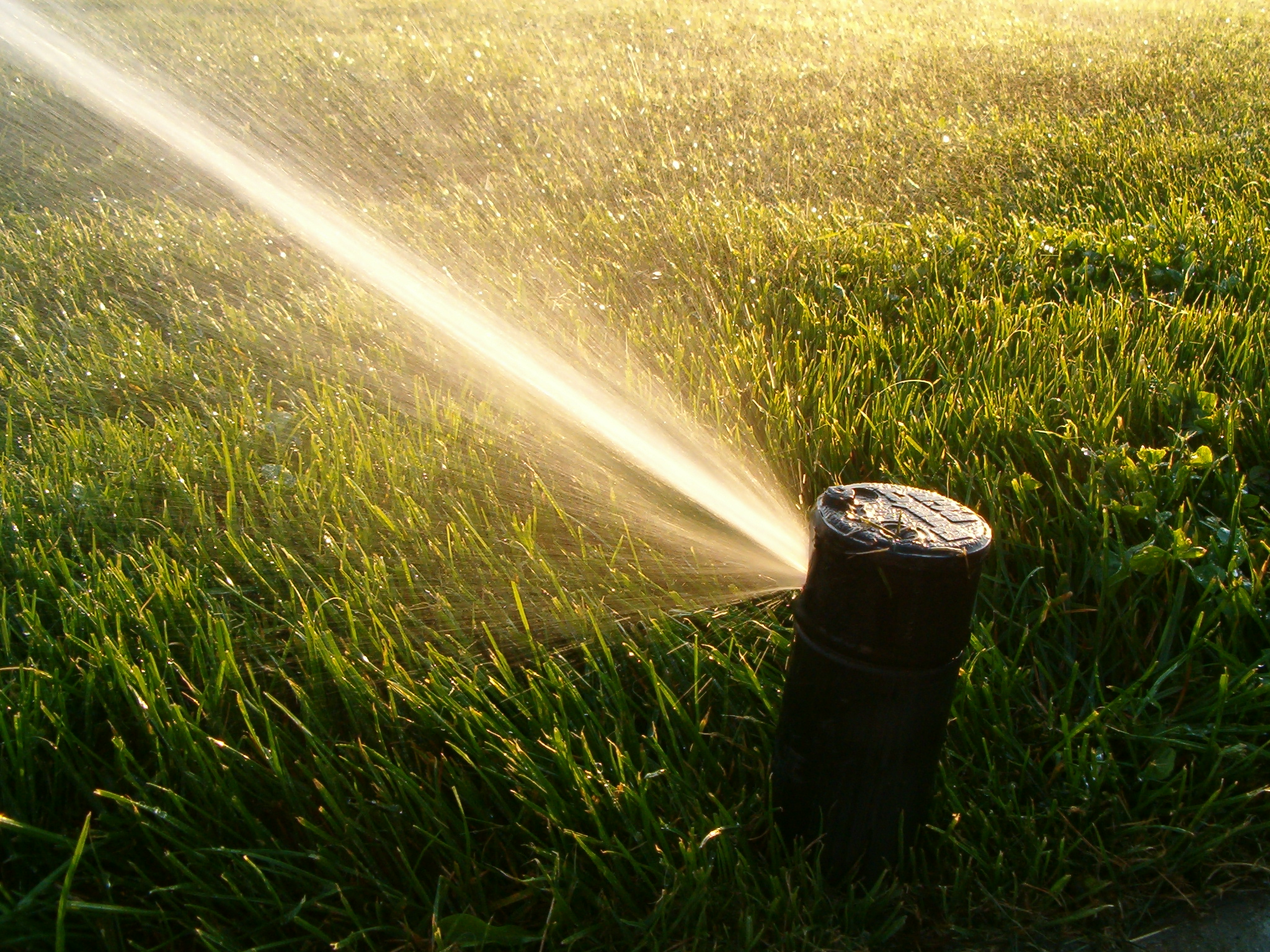
Summer Watering For Your Landscape

Watering your plants in the sweltering summer heat can often times be a challenge! Many gardeners resort to watering for a shorter period of time and find they have to give their plants and lawn a refill more often. If you want to see your landscape flourish with beautiful grass and gorgeous flowers, now is the time to teach yourself, and your plants, good watering practices!

When watering your plants and lawn, the ideal result is for them to be as self-sufficient as possible. The aim of a savvy gardener is to water deeper and less often. This method will help roots grow deeper and thus access even more water farther down where it’s less likely to dry out.  Watering deeper sends the roots where you want them to go, and when you water less frequently, it makes the roots go searching for this “buried treasure.” In comparison, if you tend to water shallow and more often, you will end up with a shallow root system.

If you’ve been watering more frequently and for a shorter period of time, try retraining your plants and lawn by beginning to water half as often, but twice as long when you do water. It may take some time, but eventually you’ll find yourself watering less and less often with a picturesque landscape to show off your hard work!

Filed Under: Garden Center, Gardening Tips, Gardening Wisdom, What Does the Gardener Say? Tagged With: Good Watering Practices, Landscape Care, Summer Watering, Watering, Watering Deeper

May 4, 2019 By Hyams Garden Center

Grow your Berries in Containers!

Growing your own berries is an ideal way to save money vs. buying them from the store and can be a very rewarding summertime treat! One of the easiest ways to care for these different berries is by growing them in a container. Doing this gives you the ability to control the soil type the plant needs as well as protecting it from subfreezing temperatures in the winter. All berries enjoy at least 6 to 8 hours of sunlight a day as well as a good draining soil and container.

In choosing a pot, you may want to decide to go with a plastic container since they hold in moisture well but not heat, they are less expensive and are very light weight in comparison to other containers. Berries can be a favorite treat not only for you, but for birds as well. Keep an eye out when berries start forming; you may need to use a bird-friendly netting to cover the plants.

Blueberries are one of the easiest berries to care for in that they are highly resistant to pests and diseases. They require the lowest soil pH of all berries ranging between 4.5 and 6.0 depending on variety. To ensure a good harvest, choose two different varieties to plant since blueberries need to cross-pollinate. Blueberries don’t enjoy having “wet feet” so choose a pot and soil that will drain well.

Blackberries are extremely hardy plants and are great for container gardening. When choosing your container, choose one that is at least 12 inches wide and 12 inches deep and plant only one per pot. Using a soil such as the Pro-Mix Outdoor is a good choice for planting blackberries since they need a pH of 5.0 to 6.5. Blackberries can be susceptible to a few pests and disease such as spider mites, stinkbugs, orange rust, and powdery mildew.

Raspberries enjoy as much water as they can get and are easily grown using a 5-gallon plastic container. You may want to drill a few addition holes in the bottom of the pot, however, since raspberries don’t like to be waterlogged and this situation could lead to diseases. As with blackberries, using a similar soil is a good choice for planting raspberries with a pH of 5.6 to 6.2. Keep an eye out for pests and diseases that can attack raspberries: cane borers and tarnished plant bugs as well as raspberry mosaic and verticillium wilt.

Strawberries are one of the easiest fruits to grow since they practically take care of themselves as long as their basic needs are met. They grow well in most any container that is at least 8 inches deep (if sitting on the ground) or 12 inches wide (if hanging). When planting, use a good potting soil and plant only deep enough that the area where the leaves begin growing is flush with the surface of the soil. More than likely, the only problem you may encounter with strawberries are slugs. If your plants are on ground level, they will be more susceptible to slugs, but a trick to deterring these pests is to line the top of the container with copper tubing or strips on the outside.

Stop by Hyams Nursery for more information on berries and other mouthwatering plants such as the muscadine and scuppernong grapes!

Filed Under: Garden Center, Gardening Tips, Planters and Pots Tagged With: Growing Berries in Containers, Hyams Garden Center, Planters, Pots

  • « Go to Previous Page
  • Page 1
  • Interim pages omitted …
  • Page 15
  • Page 16
  • Page 17
  • Page 18
  • Go to Next Page »

Primary Sidebar

Find us on Facebook

Hyams Garden & Accent Store

Recent Posts

  • The Charleston Garden in Transition: Beauty Between Summer and Autumn
  • A New Season Begins: Planting for Fall in the Lowcountry
  • Before the Weeds Wake: Preparing Your Charleston Lawn for Fall

Categories

  • Accent and Gift Store
  • Bedding Plants
  • Candles
  • Christmas Décor
  • Custom Designed Containers, Pots, Window Boxes and Baskets
  • Diagnostic Center
  • Everyday Gift Items
  • Featured Articles
  • Festive Décor for Various Seasons
  • Fountain Installations
  • Fountains
  • Garden Center
  • Garden Store
  • Gardening Supplies
  • Gardening Tips
  • Gardening Wisdom
  • Green House
  • Hear the Flowers Whisper!
  • Home and Garden Accents
  • Home Décor
  • Join Our Team
  • Life like Botanicals and Flowers
  • Nursery
  • Outdoor Décor
  • Planters and Pots
  • Seasonal Décor
  • Services
  • Statuary
  • Uncategorized
  • What Does the Gardener Say?
  • Wreathes, Bows and Ribbons

Copyright © 2026 HyamsGardenCenter.com