• Skip to primary navigation
  • Skip to main content
  • Skip to primary sidebar

Hyams Garden Center and Accent Store

Serving Greater Charleston Area with Quality, Variety & Professionalism since 1981

  • Garden Center
    • Plants
    • Fountains, Statuary and Garden Décor
    • Planters & Pots
    • Garden Supplies
    • Hyams Gift Cards
  • Gardening Wisdom
    • Hear the Flowers Whisper
    • What does the Gardener say?
  • Services
    • Delivery and Planting
    • Fountain Installations
    • Custom Designed Pots, Containers & Window Boxes
    • Diagnostic Center
    • Special Orders
    • Christmas Tree Delivery & Set up
  • Accent & Gift Store
    • Home Décor & Gift Items
    • Life like Botanicals and Flowers
    • Wreaths, Bows & Ribbons
    • Candles
    • Seasonal Décor
    • Christmas Décor
    • Greeting Cards for All Occasions
    • Hyams Gift Cards
  • About Us
    • Location and Hours of Operation
    • Contact Us
    • Meet Our Team
  • Inventory
    • Bedding Plants
    • Bulbs
    • Fruit Trees & Plants
    • Garden Supplies
    • Hanging Baskets
    • Nursery
    • Topiaries
    • Trees
    • Tropicals
    • Vegetables & Herbs
    • Water Plants

Gardening Wisdom

January 2, 2021 By Hyams Garden Center

Fountain Maintenance

Here is how one needs to take proper care of all cast stone fountains:

Ensure that the pump always remains submerged. In order to do that consistently fill the fountain and maintain a proper water level. When the water level is too low, the pump runs the risk of being damaged. The frequency of filling the water depends on water flow and specific weather conditions in which the fountain runs. Proper fountain performance also depends on appropriate water level.
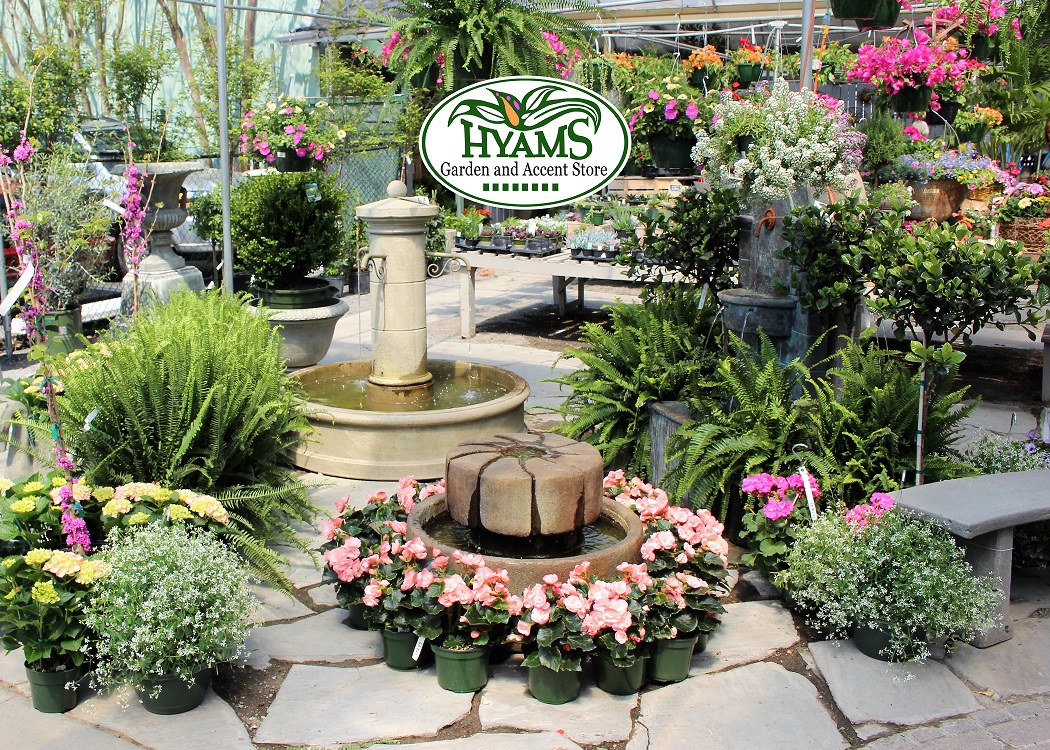
Pump inflow needs to be kept free of debris to ensure proper water inflow. Cleaning it periodically will let your pump last longer.

Use a mild soap and a soft bristle brush if the fountain requires a cleaning. Do not use bleach as it may affect the patina.

Hyams Garden Center carries “Algaecides” if one needs to combat the buildup of algae.
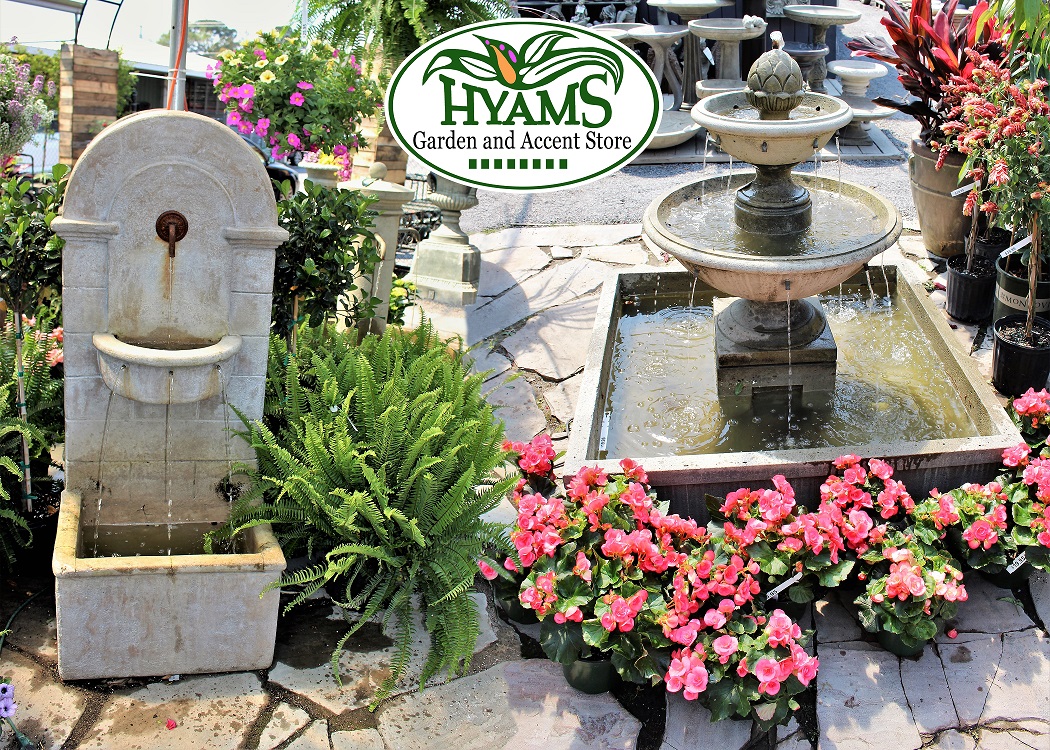
Hyams Garden Center is always ready take your calls ( 843-795-4570) if you have any questions concerning your fountain. For problems that cannot be remedied over the telephone, an onsite visit can be scheduled. You will be charged a minimum $50 fee for each onsite consult.   
Filed Under: Fountains, Garden Center, Gardening Tips, Uncategorized, What Does the Gardener Say?

January 2, 2021 By Hyams Garden Center

Abutilon . Indian Mallow . Chinese Lantern . Flowering Maple

Abutilon is a bell shaped flower. It is available in yellow, pink, orange and deep red colors. It belongs to the Mallow Family of plants. It is also called Chinese lantern or Indian mallow. Since its foliage resembles maple leaves, it is also known as Flowering Maple. It is believed that this flower was named Abutilon by Avicenna (980 – 1037 AD), the famous Persian physician who is hailed as the father of early modern medicine.

While  some  botanists  think that this plant is native to South America, 200 species of Abutilon  genus  are known to grow in the tropical and sub-tropical regions of  Africa, Asia and Australia. It is a perennial which is grown for its decorative lantern like calyces. It thrives in well-drained soil in places where it gets plenty of full to part sunshine. The species of Abutilon depicted in the picture is known as Redvein Indian Mallow.

Floriography (language of flowers) suggests that Abutilon symbolizes ‘Meditation.’ Meditation confers the wisdom of insight. It helps us get in touch with the center of our being, of who we are. It opens the eyes of our heart and spirit to experience the True, the Good and the Beautiful present within and around us. Meditation helps cultivate the flower of inner peace whose fragrance permeates through our acts of kindness.

( By Marshal Upasi and Jane Livingston-Upasi)

Filed Under: Gardening Wisdom, Hear the Flowers Whisper! Tagged With: Abutilon, Chinese Lantern, Indian Mallow

October 10, 2020 By Hyams Garden Center

Colors of Autumn

Every year the month of October ushers in colors of autumn across the American landscape. Capturing the American Spirit of this unique time of the year Poet Carl Sandburg (1878 – 1967) paints the colors of autumn in the following way:

I spot the hills

With yellow balls in autumn.

I light the prairie cornfields

Orange and tawny gold clusters

And I am called pumpkins.

On the last of October

When dusk is fallen

Children join hands around me

Singing ghost songs

And love to the harvest moon;

I am a jack-o’-lantern

With terrible teeth

And the children know

I am fooling.

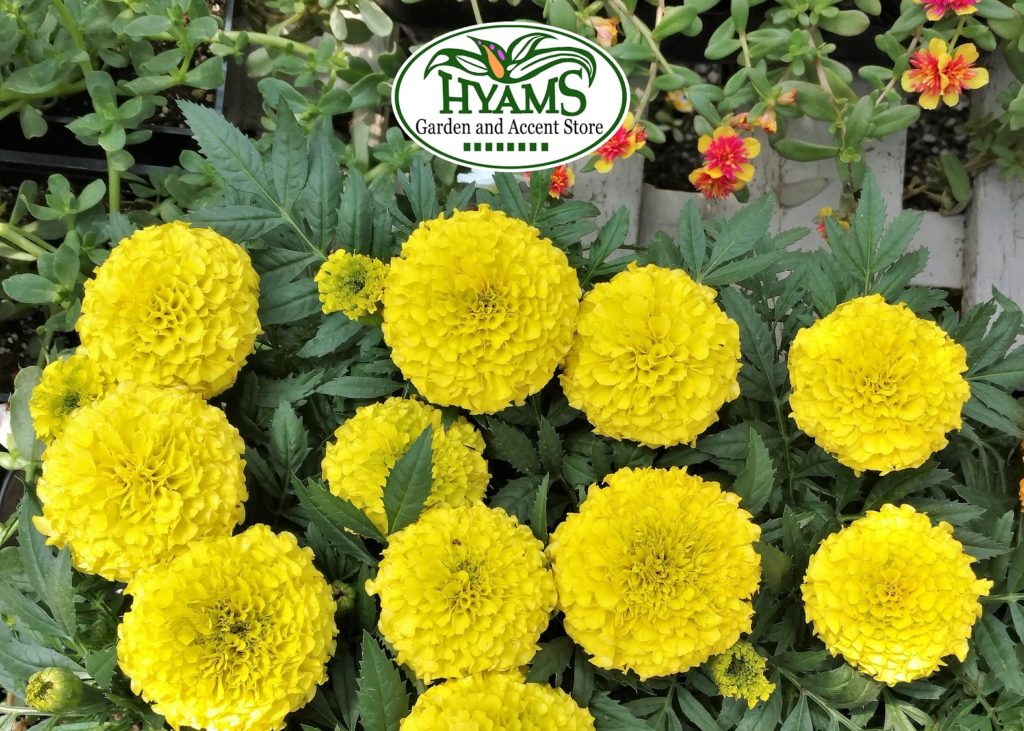
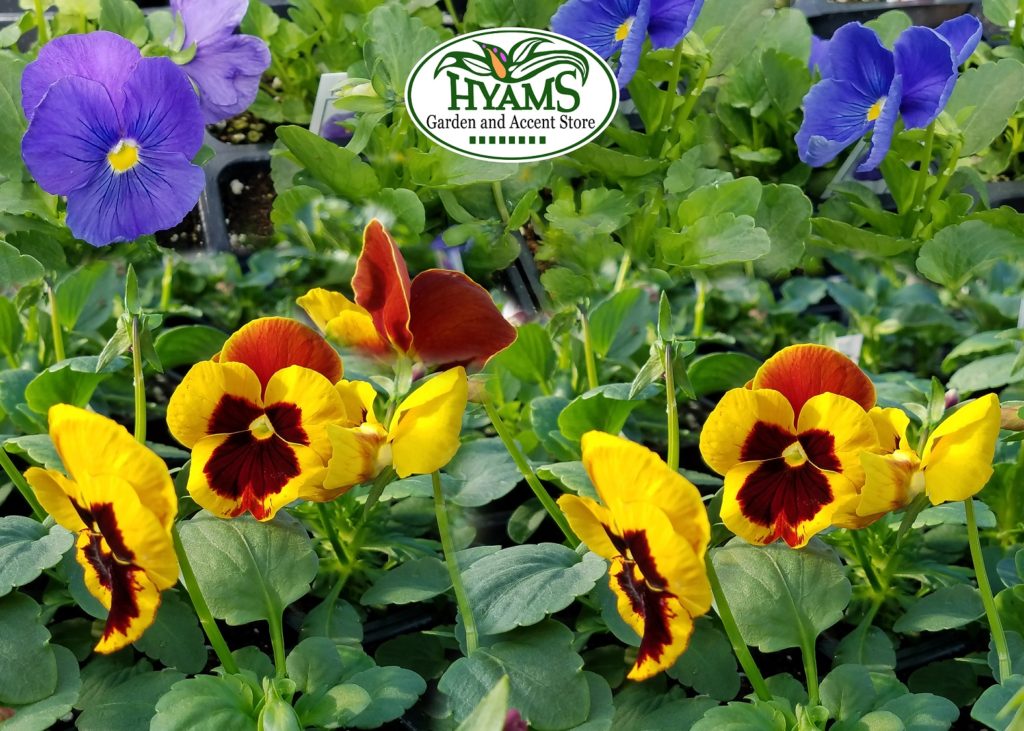
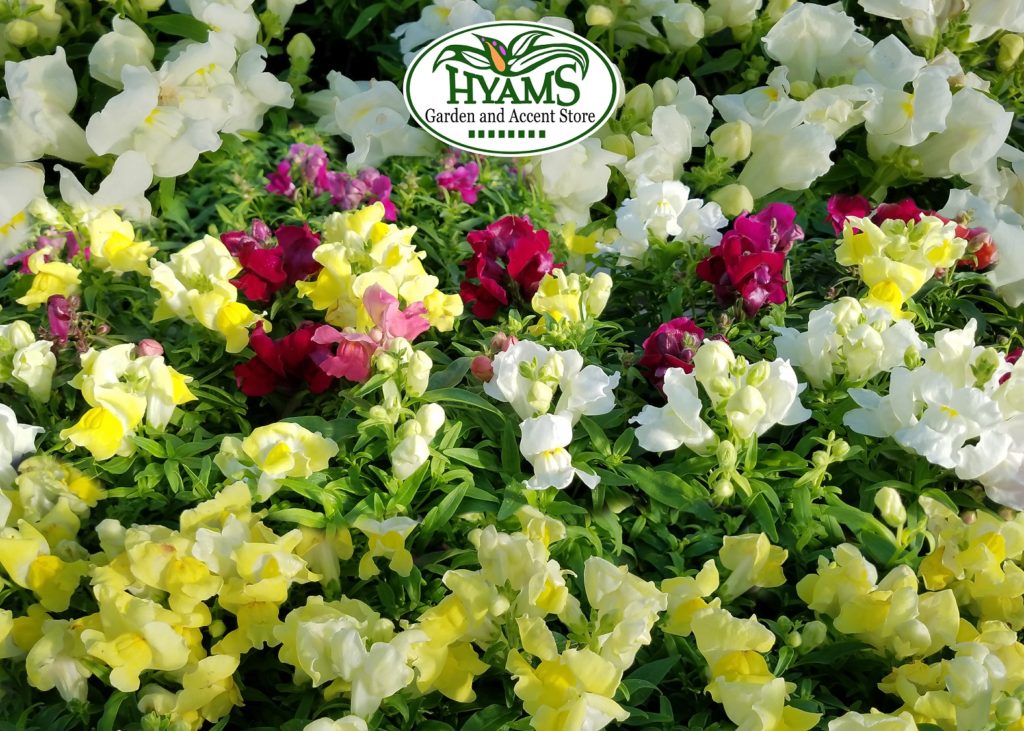
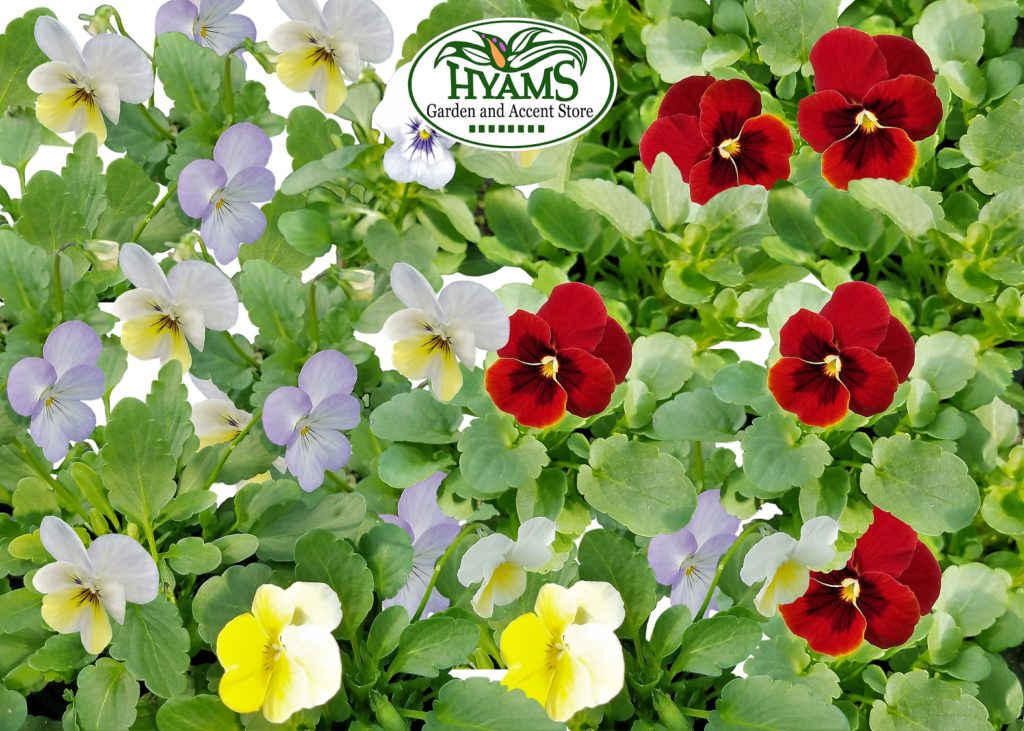
With the arrival of October, Hyams Garden Center tries to pass on the same excitement that Carl Sandburg, a champion of the American Spirit, felt about the approaching Halloween and Thanksgiving. Do visit our Garden Center to buy Halloween décor, crotons, cyclamen, pansies, violas, mums, snap dragons, marigolds and a lot more other attractive spooky décor and plants to usher the spirit of the season into your homes and gardens.  

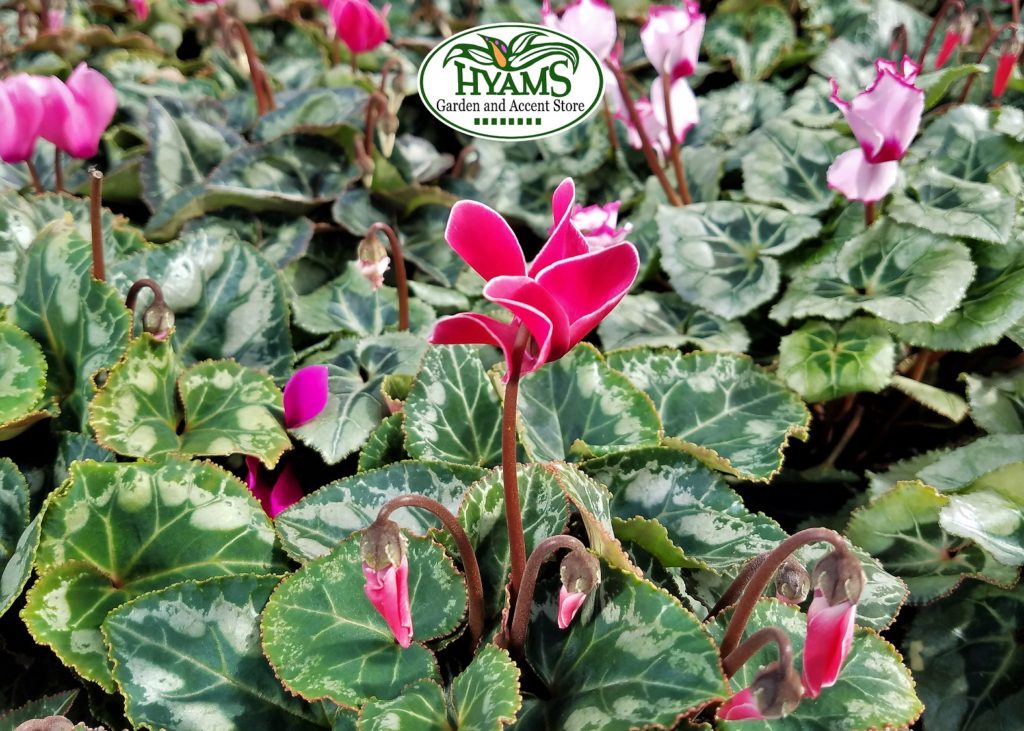
Cyclamen
Marigold
Pansies
Snap Dragon
Viola

Filed Under: Hear the Flowers Whisper!

October 3, 2020 By Hyams Garden Center

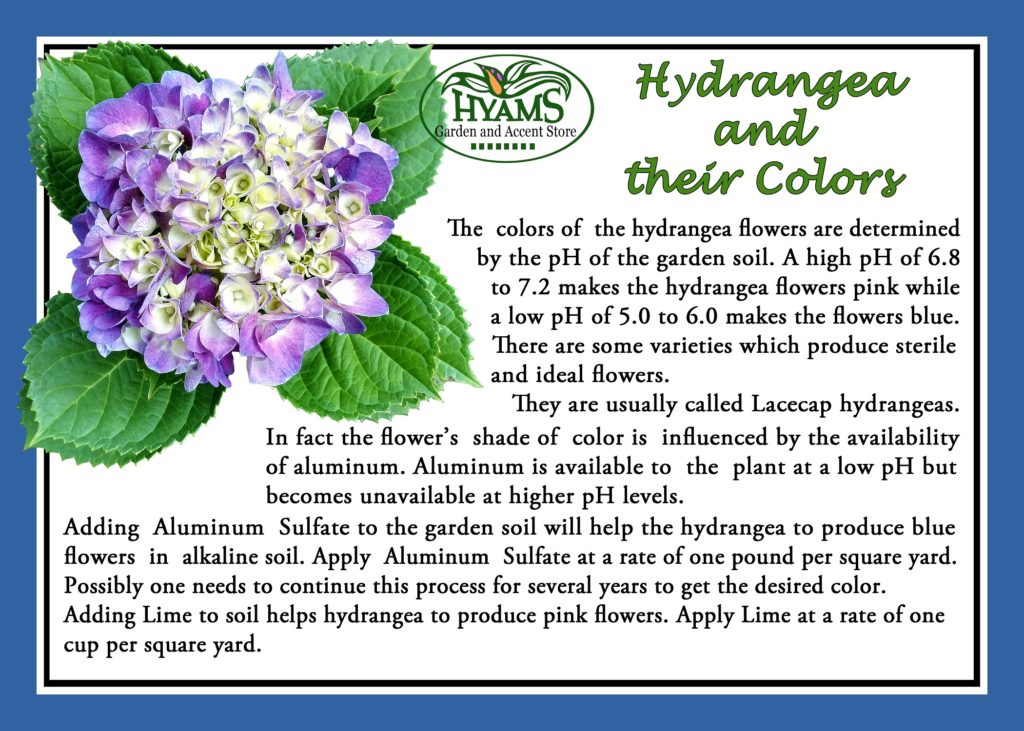
Maintaining a Healthy Hydrangea

The beautiful Hydrangea is a spectacular, colorful, floral display that adds charm and grace to any summer garden. Hydrangea derived its name from two Greek words, namely, hydr (water) and angeion (vessel). Water vessel is such a fitting name for hydrangea as this flower requires constant moisture to stay happy, healthy and blooming.  However, getting the balance right is crucial to its health and survival.

There are some common signs and symptoms to look for in order to provide the best environment for your Hydrangea to thrive.

  1. Leaf Curl indicates that the plant has either been water deprived or is suffering from a disease.
  2. A sudden onset of ‘Yellowing of Leaves’ which then turn brown and fall off can indicate three things, namely, (a) the plant has become too dry; (b) the plant has become too wet; (c) the plant has received too much fertilizer.

Any of these three events can cause damage to the plant’s root system. If a plant has dried out, thoroughly soak the root ball, then make sure the soil is able to drain well. Allow time for soil to dry out slightly before the next watering. If conditions are favorable, roots will regenerate. A plant should be healthy before adding any fertilizer. Too much fertilizer can burn roots causing leaves to brown.

3. Leaf Spots are usually caused by fungus or bacteria.

(a) Cercospora Leaf Spot – Caused by a fungus, produces purple or brown colored leaf spots at the base of the plant.

(b) Anthracnose – Caused by a fungus, creates large brown, yellowish or black spots on leaves and flowers. If not properly attended to, this can be fatal to a hydrangea. Remove and destroy infected plant parts to discourage spreading of spores.

(c) Leaf Rust – Caused by a waterborne fungus, Pucciniastrum hydrangea, creates orange spots on the undersides of leaves.

(d) Bacterial Leaf Spots – Caused by the pathogen Xanthomonas campestris, produces spots that are either red or purple in color usually appearing on the leaves at the base of the plant. Spots by the leaf veins have an angular appearance.

4. Powdery Mildew – Caused by a fungus, appears as a powdery gray coating on leaves.

For fungal and bacterial mitigation, make sure there is enough air circulation around the plant. Cut back dried blooms and affected leaves. Keep the ground under the plant free from dead leaf and bloom debris. Water plant at the base rather than overhead to discourage moisture accumulation on the leaves. Fungicides can also be used. Apply in Spring and Mid-Summer. Application frequency depends on the severity of the case. Consult the product packaging for details.

BONIDE Revitalize Biofungicide is a broad-spectrum preventive biofungicide and bactericide. It utilizes the power of a naturally occurring beneficial bacterium, Bacillus amyloliquefaciens strain D747, to control and suppress fungal and bacterial diseases in plants. This bacterium triggers the plant’s immune response to fight off pathogens. It will also colonize plant roots, which prevents fungi and bacteria from establishing there.

Diseases controlled by this product:

Anthracnose (Colletotrichum species), Bacterial leaf blights, spots and specks (Erwinia, Pseudomonas and Xanthomonas species), Black Mold, Brown Spot, Black Crown Rot (Alternaria species). Black Spot of roses (Diplocarpon rosae), Gray Mold, Botrytis blight, Fruit Rot (Botrytisspecies), Leaf spots (Alternaria, Cercospora, Entomosporium, Helminthosporium, Myrothecium and Septoris species) and Powdery Mildews. (Podosphaera, Erysiphe, Golovinomyces, Sphaerotheca and Oidium species; Uncinula necator, Oidiopsis taurica and Leveillula taurica).

Filed Under: Gardening Tips, Gardening Wisdom, What Does the Gardener Say?

  • « Go to Previous Page
  • Page 1
  • Interim pages omitted …
  • Page 14
  • Page 15
  • Page 16
  • Page 17
  • Page 18
  • Page 19
  • Go to Next Page »

Primary Sidebar

Find us on Facebook

Hyams Garden & Accent Store

Recent Posts

  • The Charleston Garden in Transition: Beauty Between Summer and Autumn
  • A New Season Begins: Planting for Fall in the Lowcountry
  • Before the Weeds Wake: Preparing Your Charleston Lawn for Fall

Categories

  • Accent and Gift Store
  • Bedding Plants
  • Candles
  • Christmas Décor
  • Custom Designed Containers, Pots, Window Boxes and Baskets
  • Diagnostic Center
  • Everyday Gift Items
  • Featured Articles
  • Festive Décor for Various Seasons
  • Fountain Installations
  • Fountains
  • Garden Center
  • Garden Store
  • Gardening Supplies
  • Gardening Tips
  • Gardening Wisdom
  • Green House
  • Hear the Flowers Whisper!
  • Home and Garden Accents
  • Home Décor
  • Join Our Team
  • Life like Botanicals and Flowers
  • Nursery
  • Outdoor Décor
  • Planters and Pots
  • Seasonal Décor
  • Services
  • Statuary
  • Uncategorized
  • What Does the Gardener Say?
  • Wreathes, Bows and Ribbons

Copyright © 2026 HyamsGardenCenter.com